A tooth knocked out in an accident: what to do immediately
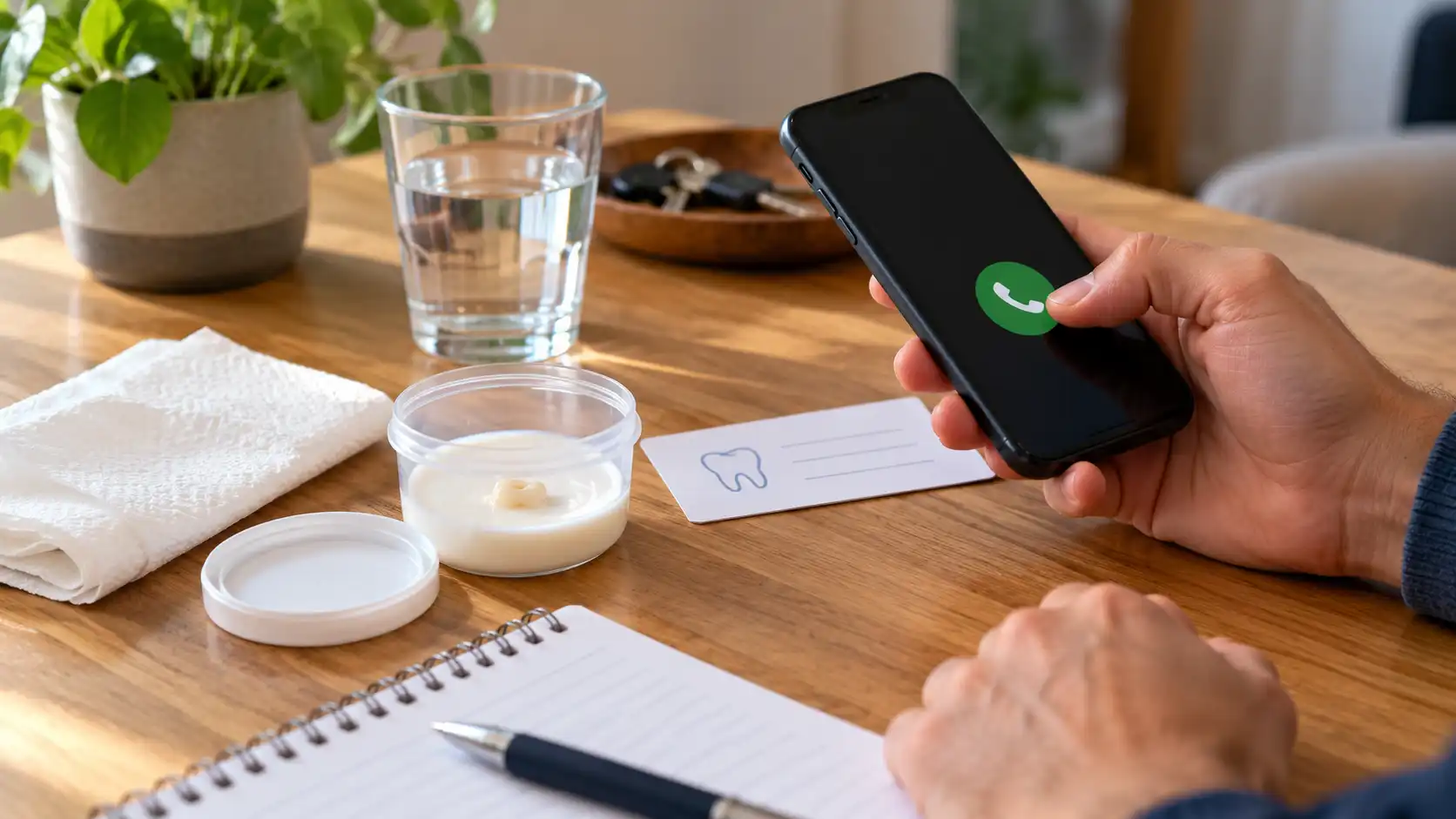
A tooth knocked out by an injury needs urgent dental care. Find it if possible and hold it by the crown, never by the root.
Important
This article provides general information and does not replace an individual consultation, diagnosis or treatment from a dentist or another healthcare professional. If you have symptoms, seek advice appropriate to your situation. Do not change a treatment based solely on this content.
Do not replace a baby tooth or a tooth whose nature you do not know. In France, call 15 or 112 in the event of a serious shock, loss of consciousness or associated worrying signs.
In this moment, a few specific gestures are better than a prolonged search. Contact a professional immediately while you are arranging transportation.
First steps without delaying departure
After a severe head injury, loss of consciousness or vomiting, call 15 or 112 in France. Otherwise, seek urgent dental care immediately. Pick up the tooth by its crown, never its root, and do not scrub the root surface.
If the tooth is dirty, rinse it briefly under running water without scrubbing, holding it by the crown. A permanent tooth may be gently put back if you are certain it is a permanent tooth and the person is conscious and can cooperate safely. Do not force it. Never replant a baby tooth. If you are unsure or cannot replace it, keep it in milk or, if unavailable, saline, and seek care without delay. Do not let it dry out or store it in ice.
Why time and storage matter
The surface of the root carries tissues useful for reimplantation. Drying and rubbing can damage them. Wet storage aims to limit this degradation during the journey; it does not justify delaying the consultation.
A knocked-out tooth is different from a tooth that has moved but remains in the mouth. In that case, do not pull it or try to reposition it yourself. Even a tooth that looks intact after an injury may need examination, because damage is not always immediately visible.
Follow-up after initial treatment
Emergency treatment and subsequent checks meet separate objectives. The practitioner assesses the tooth, tissues and associated lesions, and then organizes the monitoring. An initial improvement does not in itself ensure that the fate of the tooth is definitively settled.
Keep the reports and have the accident documented for possible insurance procedures. Write down the time of the shock and how to store it if you know them, without wasting time looking for this information before you leave. The food and maintenance instructions will be adapted to the care received. In this situation, the techniques of first urgency and the speed of care take precedence over a complete reading of the article.
Protecting the tooth and seeking immediate care
Do not rub the root or keep the tooth dry. If it is not replaced, keep it in milk or, failing that, saline and leave quickly to consult. Time out of the mouth counts; do not delay departure.
Immediate replacement of a permanent tooth may be possible if it can be done safely and without force. If you are unsure, keep it in a suitable storage medium and seek urgent instructions. Never replant a baby tooth.
A tooth that is displaced but still in place also requires a quick examination: do not manipulate it to reposition it. After the emergency care, ask for the necessary checks and useful documents.
Frequently asked questions
Key takeaways
Act quickly, protect the root and distinguish between permanent tooth and baby tooth. Emergency care should be monitored. A knocked-out tooth requires immediate action and a distinction between a permanent and a baby tooth. Never replant a baby tooth or one you cannot confidently identify. Handle a recovered tooth by its crown, protect the root without scrubbing and use a suitable storage medium while seeking urgent care. Explain how the injury happened. Severe trauma or associated symptoms requires medical help, and initial dental treatment must be followed by check-ups.
Sources
Assurance Maladie — Traumatisme dentaire dent contuse fêlée cassée ou luxée (2025).
NHS — Taking care of your teeth and gums
Last editorial review: October 2026
 Numa Costa
The pen name under which I write articles and develop my editorial websites. Curious by nature, I like to understand how things work, explore everyday questions and make information easier to understand and use.
→ More about the author