Pain after a tooth extraction: what changes should you report?

After extraction, pain may exist. Pain that is clearly worsening, persistent bleeding or signs of infection should be reported.
Important
This article provides general information and does not replace an individual consultation, diagnosis or treatment from a dentist or another healthcare professional. If you have symptoms, seek advice appropriate to your situation. Do not change a treatment based solely on this content.
Swelling with difficulty breathing or swallowing requires urgent help. For postoperative concern, contact the team rather than changing the treatment alone.
The question is not only “how much do I hurt?” but “how does it change?” Saying that the pain had decreased and then resumed helps more than just “it’s not normal.”
Changes over time matter more than an isolated symptom
Extraction can be followed by pain, swelling, and discomfort at the mouth opening. These effects depend on the complexity of the technique. The office should explain what is expected and how to relieve discomfort. A significant aggravation or pain that does not follow the announced evolution deserves a call.
A little blood in the saliva is not described as active bleeding that continues to fill the mouth. Specify what you see and what you have already done according to the instructions. Under treatment that promotes bleeding, this context should be known to the team.
Dry socket and infection are different
Dry socket (alveolar osteitis) involves a healing problem in the tooth socket, often associated with loss or breakdown of the blood clot. It can cause significant pain after an extraction. Infection is also possible, but not every episode of postoperative pain proves infection or automatically requires an antibiotic.
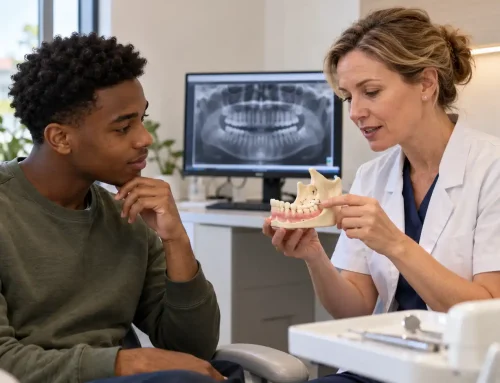
The examination distinguishes these situations and allows for appropriate treatment. It may be on the wound, relief or an identified complication. Do not place any medicine, powder or homemade product in the tooth socket to try to treat the problem.
Changes to report promptly
Quickly contact the team in case of severe or increasing pain, persistent bleeding despite instructions, fever, discharge or unusual swelling. Also report a change in sensitivity that extends beyond the expected anesthesia. Difficulty breathing or swallowing is a medical emergency.
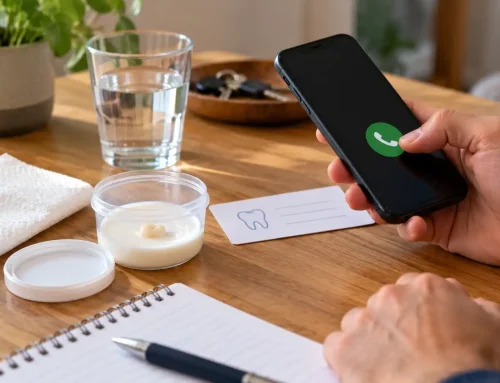
Give the date of extraction, the tooth or side concerned and the drugs actually taken. Do not exceed the prescribed doses to wait a little longer. If the dental practice is closed, use the orientation given on the output sheet. Proper follow-up begins with a clear description, without having to decide for yourself whether the symptom is called dry socket or infection.
Describing how pain changes after extraction
Note the day of the treatment, the time of the change and the associated signs. The office can look for a complication, including dry socket or infection, without you having to choose a diagnosis yourself.
Review your written aftercare instructions. If you do not have them, ask the team for guidance. The article on dental emergencies offers further reference points, while postoperative assessment remains necessary.
Do not scratch the area and do not try to remove what seems unusual to you. Tips on meals after extraction should remain consistent with the care instructions.
Frequently asked questions
Key takeaways
The evolution of symptoms guides the call to the office. Aggravation deserves an opinion, without manipulation of the wound or home diagnosis. After an extraction, evolution counts as much as the presence of a symptom at a given moment. Note increased pain, persistent bleeding, fever, or unusual swelling, and then contact the team with this information. Do not explore the wound or change the prescription yourself. The instructions of the office indicate the contact and the techniques adapted to your intervention. If you have difficulty breathing or swallowing, seek urgent medical help immediately.
 Numa Costa
The pen name under which I write articles and develop my editorial websites. Curious by nature, I like to understand how things work, explore everyday questions and make information easier to understand and use.
→ More about the author