Can a tooth still hurt after root canal treatment?
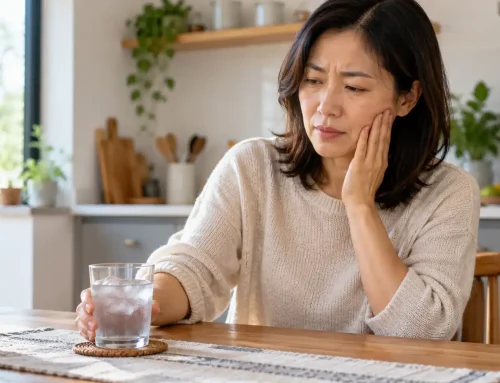
Yes, a root canal-treated tooth can still be painful: the tissues around its roots remain sensitive. Discomfort after the treatment or a pain that reappears do not necessarily have the same cause and must be evaluated according to how they change.
Important
This article provides general information and does not replace an individual consultation, diagnosis or treatment from a dentist or another healthcare professional. If you have symptoms, seek advice appropriate to your situation. Do not change a treatment based solely on this content.
Quickly contact the dentist if you have severe pain, swelling, or fever, especially if symptoms increase.
“The nerve has been removed, so why am I hurting?” The question makes sense. It becomes clearer when you distinguish the inside of the tooth from what surrounds it.
A tooth without pulp still has sensitive tissues around it
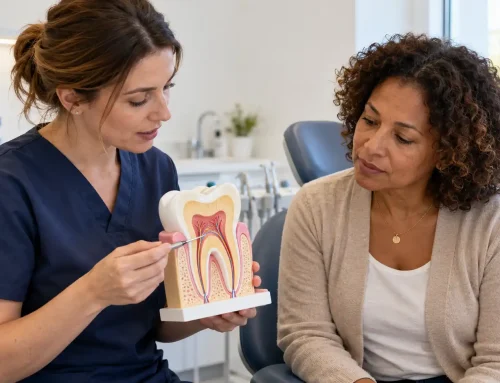
The treatment of the canals removes or treats the tissues present inside the tooth. It does not remove the ligament that connects the root to the bone, nor the surrounding gum. These tissues can be sensitive, especially when inflammation already existed before care.
Discomfort after a recent intervention should be assessed according to its evolution. An old pain that reappears several months or years later requires a new search. The moment of onset, the pain at rest or pressure and the associated signs guide this assessment.
Several possible causes
The dentist checks how the teeth meet when you close your mouth, the restoration and the tissues around the root. A restoration carrying too much biting pressure, a crack, persistent infection or new contamination are among the possibilities. Pain can also come from a neighbouring tooth and be difficult to locate.
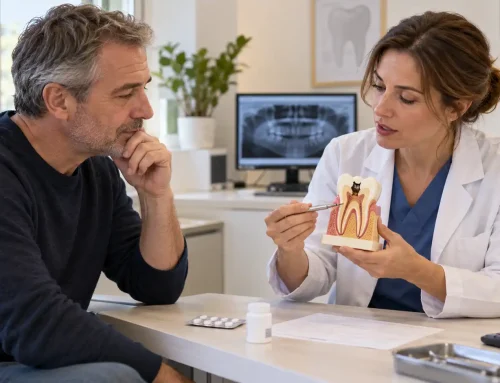
An X-ray may show the condition around the root, but it should be interpreted with the examination and tests. Not all pains require canal retreatment. Depending on the cause, the management may concern restoration, endodontic treatment or another structure.
Understanding possible retreatment
Reprocessing involves regaining access to the canals, removing materials when necessary, and looking for a cause for infection or failure to close. Its feasibility depends in particular on the remaining structure, the obstacles present and the prognosis of the tooth.
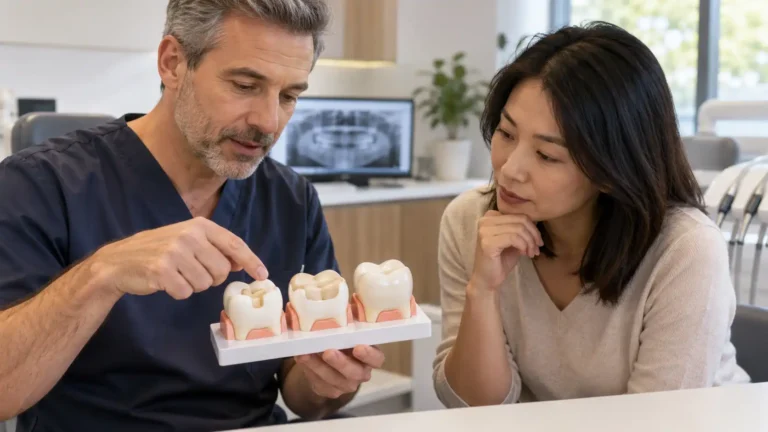
Ask what is found, what remains uncertain and what alternatives are possible. A proposal for extraction or surgery must be related to these elements, without being presented as the automatic consequence of any pain. In the meantime, avoid testing the tooth by voluntarily biting hard objects. Quickly report growing pain or swelling; taking an antibiotic without an assessment may mask the situation without treating its cause.
Assessing pain that has returned
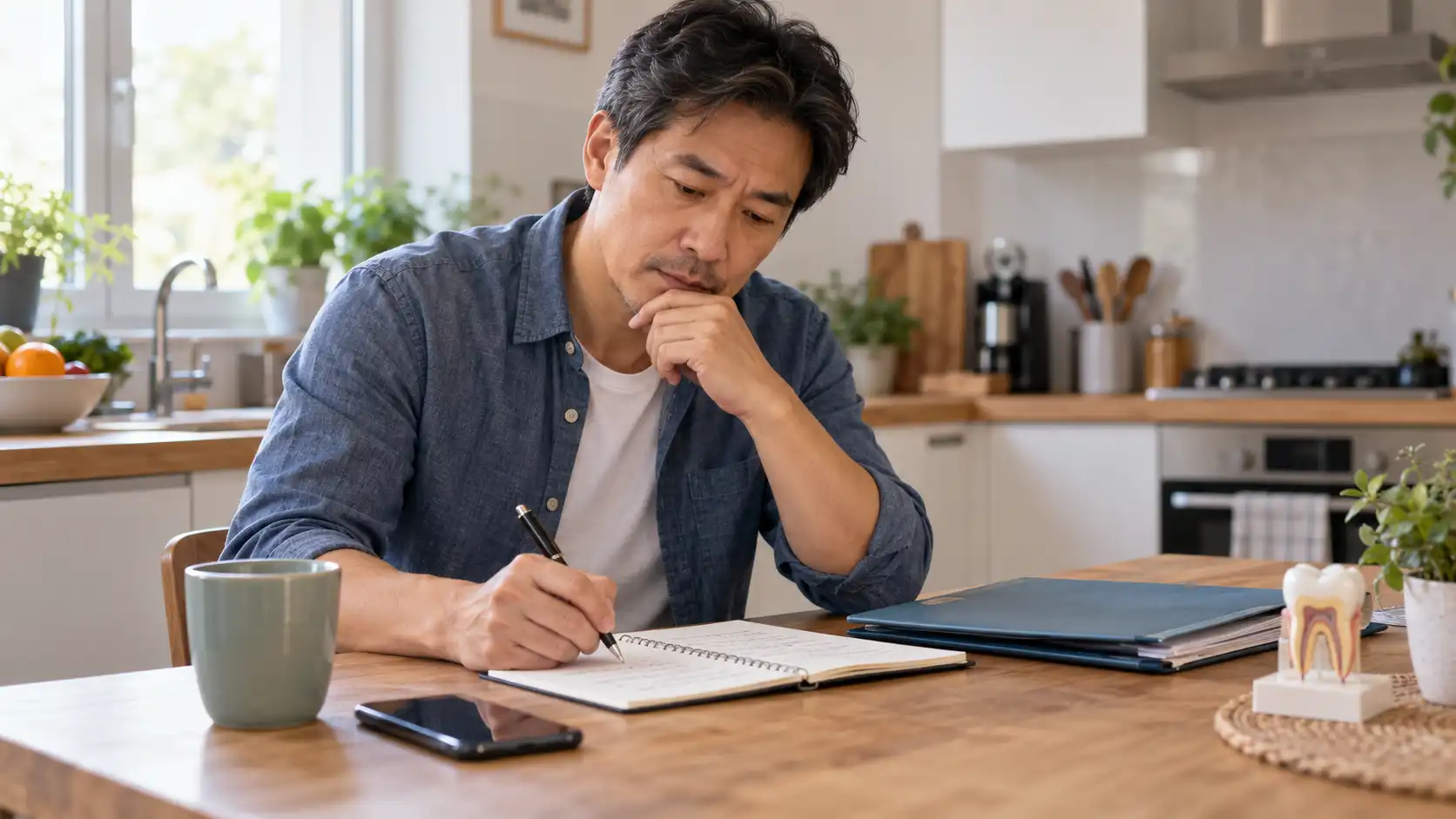
Note whether it started right after root canal treatment or long after. Indicate whether it occurs when chewing, at rest or in episodes. This timeline helps more than a conclusion found online.
The assessment focuses on the roots, surrounding tissues and tooth protection. It can lead to monitoring, adjustment or retreatment depending on the cause. A crown does not make the tooth independent of any problem.
You can ask if the pain corresponds to the expected follow-up or if a new assessment is necessary. Also make it clear when to call back rather than waiting for an arbitrary duration.
Frequently asked questions
Key takeaways
A treated tooth may remain sensitive or experience a new problem. The timing of symptoms and the examination guide the next steps. Even without a living pulp, a tooth remains surrounded by sensitive tissues. Discomfort shortly after treatment and pain returning much later may have different explanations. Note the onset, progression and circumstances, then have the tooth and its restoration checked. Assessment may lead to an adjustment, monitoring or further treatment, depending on the cause. Do not accept significant pain, swelling or fever as something you simply have to put up with.
Sources
 Numa Costa
The pen name under which I write articles and develop my editorial websites. Curious by nature, I like to understand how things work, explore everyday questions and make information easier to understand and use.
→ More about the author