A crown has come off: what to do before your appointment
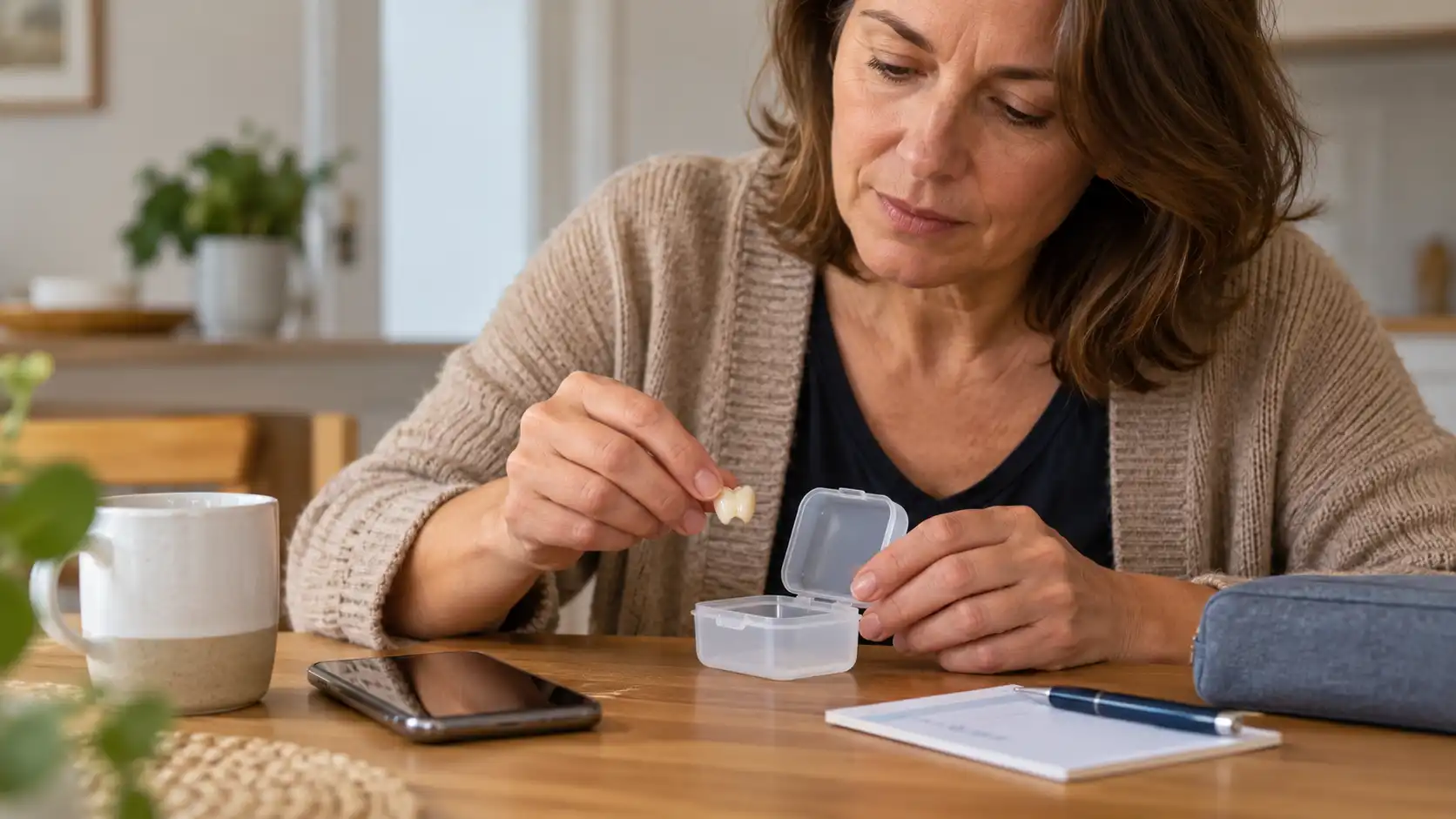
A loose or movable crown should be examined. Contact the office to have the consultation period specified and keep the component if it is out.
Important
This article provides general information and does not replace an individual consultation, diagnosis or treatment from a dentist or another healthcare professional. If you have symptoms, seek advice appropriate to your situation. Do not change a treatment based solely on this content.
Do not glue a crown with household glue and do not try to force it back. Difficulty breathing or suspicion of inhalation requires urgent help.
A crown may come off during a meal, leaving you unsure whether to keep it or try to put it back. Keep the crown and contact the dental practice for instructions.
Keeping the crown and protecting the area
If the crown has come out, keep it in a clean container and contact the practice. Avoid putting it back in your mouth, because it could be swallowed or inhaled. If it is still attached but feels loose, do not pull on it to check; explain the situation to the dentist.
The discovered tooth may become sensitive or more fragile. Avoid hard or sticky foods on this area and continue a gentle cleaning without a sharp instrument. Do not put any strong glue or domestic material in the crown. A troubleshooting device should only be considered on the basis of appropriate professional advice.
Why a crown can come loose
The problem can be fixation, tooth support, decay or mechanical stresses. The crown may also have been temporary. Its loss therefore does not allow to conclude that it will always be enough to reattach it, nor that it will systematically have to be redone.
The dentist examines the component, remaining tissues, edges and contacts. An intact crown can sometimes be reused if the support is suitable. Fracture or modification of the tooth can lead to further reconstruction. The decision depends on the assessment, not just the outer appearance of the piece.
Information that helps guide care
Specify when the crown was placed, if it was temporary, what you were doing when it came out, and if pain or swelling is present. Also report if any part of the tooth appears attached to the crown. Bring the component to the appointment.
The absence of pain does not make it useful to wait several weeks without notice. Ask for the recommended time frame and the steps to protect the area. Severe pain or swelling warrant prompt management. After repair, explain the reason, the maintenance and the assessments, so as not to reduce the intervention to a simple regluing without looking for the problem.
Protecting the tooth after a crown comes off
Indicate if the crown is completely out, if it remains mobile and if pain has appeared. Report a recent swelling or shock. This information helps guide the appointment.
The crown protects or restores a tooth depending on the treatment plan. Without an examination, you may not know if the tooth, seal, or other part of the treatment is involved.
Ask if the component can be reused and what needs to be checked. If a root canal-treated tooth hurts, report it even if you thought it could no longer be sensitive.
Frequently asked questions
Key takeaways
Contact the office, keep the recovered part and avoid any improvised repairs. Treatment depends on the cause of the detachment. If a crown comes out, keep it in a clean box and contact the practice, explaining any pain and the circumstances. Do not use household glue or force it back into place. The examination checks why it came off and the condition of the underlying tooth or support; the same crown cannot always be reused. Suspected inhalation or difficulty breathing requires urgent help. Prepare details of when it was placed and any recent treatment.
Sources
 Numa Costa
The pen name under which I write articles and develop my editorial websites. Curious by nature, I like to understand how things work, explore everyday questions and make information easier to understand and use.
→ More about the author