New removable dentures: what to expect in the first few days

A new removable prosthesis may require time to adjust to speak, eat and handle. Persistent discomfort or injury should be reported.
Important
This article provides general information and does not replace an individual consultation, diagnosis or treatment from a dentist or another healthcare professional. If you have symptoms, seek advice appropriate to your situation. Do not change a treatment based solely on this content.
Do not file the device or attempt a home repair. An adjustment by the practitioner may be necessary.
The first meal may require adjustment. Note the difficulties and repeat the explanations of manipulation or chewing if they remain unclear.
Getting used to a new feeling in your mouth
A removable prosthesis changes the chewing supports and the space available for the tongue. The first few days, speech, salivation or food perception may be different. A learning period is possible, but it does not justify enduring an injury.
The mouth must also adapt to the shape of the device. After extractions, the tissues can evolve and change the fit. An immediate prosthesis, placed around this period, can therefore require special adaptations. The timing of check-ups must be linked to this context.
Making eating and speaking easier
Start with foods that are easy to chew, in small pieces, and then gradually adapt according to comfort and instructions. Take the time to discover the supports. If the device toggles or moves with each bite, note the situation rather than compensating durably by avoiding chewing.
Reading a few sentences aloud can help you adjust your pronunciation. Insert and remove the denture along the route you were shown: do not force a clasp or bite down to push the appliance into place. A specific difficulty is easier to correct than a general feeling that “nothing is right”.
Recognising when an adjustment is needed
An area that rubs, a sore spot, repeated clicking or difficulty removing the prosthesis should be reported. The practitioner can control the support, contacts and form. Do not file the resin and do not fold the metal elements at home.
Specify the overnight wear and storage. After an intervention or with an immediate prosthesis, the instructions may be special; then, the rest of the tissues and the maintenance remain important. At the appointment, bring the device and describe when the discomfort appears. A professional fit can improve comfort without the need to redo the entire device.
Identifying necessary denture adjustments
Does the device move, rub at a place, or interfere with certain words? A concrete description helps the practitioner understand the difficulty. Avoid inferring that the device is unusable.
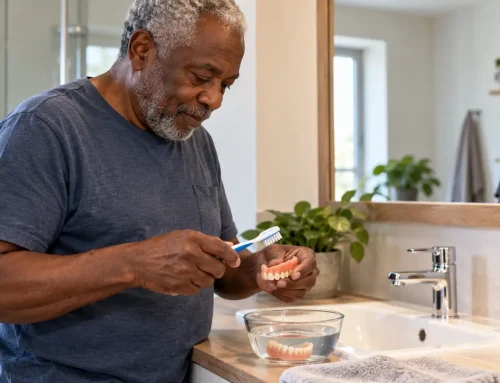
Show the placement, removal and cleaning of the prosthesis. Ask for suitable directions, especially at night, rather than applying the experience of a loved one.
The mouth and the device should be evaluated together. If the proposal is still under discussion, comparing alternatives helps to clarify your expectations.
Frequently asked questions
Key takeaways
Using a device may require adjustments. Describe the discomfort and ask for a demonstration rather than modifying the prosthesis yourself. The first days are used to learn how to put on, remove, clean and use the device according to the instructions received. Some sensations may evolve, but persistent pain or injury should not be simply endured. Note the difficulties of speech, chewing or stability in order to describe them to the assessment. Do not adjust the prosthesis yourself. Appointments allow you to adapt the device and resume the explanations, with a pace of progression compatible with your comfort and your situation.
Sources
NHS — Dentures false teeth (2025).
NHS — Taking care of your teeth and gums
Last editorial review: October 2026
 Numa Costa
The pen name under which I write articles and develop my editorial websites. Curious by nature, I like to understand how things work, explore everyday questions and make information easier to understand and use.
→ More about the author