How to clean removable dentures
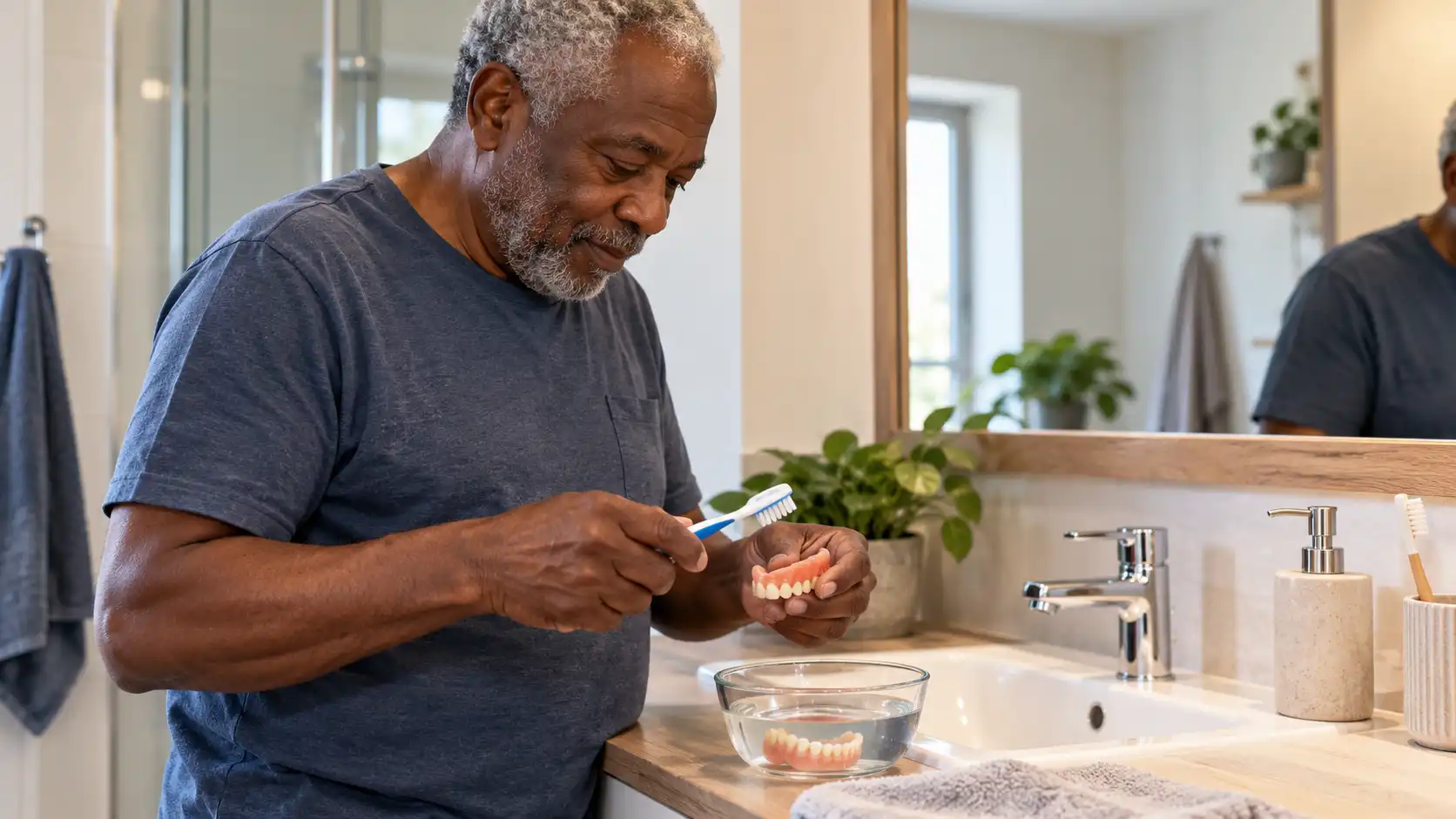
A removable prosthesis requires regular cleaning, separate from oral hygiene. The products and gestures must be suitable for your device.
Important
This article provides general information and does not replace an individual consultation, diagnosis or treatment from a dentist or another healthcare professional. If you have symptoms, seek advice appropriate to your situation. Do not change a treatment based solely on this content.
Do not use an improvised household product or abrasive method. Ask for instructions compatible with the materials of your prosthesis.
Two different things are to be maintained: the device and the tissues that carry it. Confusion can cause the remaining teeth to be forgotten or lead to the use of an unsuitable product.
Cleaning the denture methodically
Remove the prosthesis according to the learned gesture and work over a washbasin containing water or a towel, to limit damage in the event of a fall. Clean the faces in contact with the mouth, artificial teeth and accessible elements, without deforming the clasps.
Use a brush and cleaning product suitable for your denture. Toothpaste intended for natural teeth may be too abrasive for some resins. Follow any soaking product’s dilution, timing and material restrictions. Soaking does not always replace brushing away deposits. Rinse the denture as instructed before putting it back in your mouth.
Your mouth needs separate care
The remaining teeth continue to be brushed with fluoride toothpaste, including near the denture supports. Interdental spaces must remain accessible. Clean the mucous membranes and the tongue gently, according to the recommendations received.
The device may look clean while leaving an irritated mouth area. Redness, burning, or a persistent wound require examination. Hygiene and adjustment should be checked, rather than multiplying disinfectants. Pain should not be masked by additional adhesive.
Wearing, storing and checking the denture
Ask when to remove the prosthesis to leave the tissues at rest, especially at night, and how to keep it. The storage medium depends on the material and the instructions of the professional. Avoid very hot water, which can distort some components, and improvised household products.
A cracked, broken artificial tooth or deformed clasp does not repair with a household glue. Keep the fragments and contact the office. If your dexterity or vision decreases, adjust the method with a caregiver. A useful routine should be achievable without the risk of falls or confusion between products intended for the mouth and those intended for the device.
Building a denture cleaning routine
Prepare the recommended material for the dental practice and a place to handle the device carefully. Ask for a demonstration of the withdrawal if it seems difficult, especially at the beginning.
Remaining teeth still need appropriate brushing. Ask how to clean the other areas and have a sore spot examined without repeatedly irritating it.
Ask when to remove the device and how to store it. During the first days of adaptation, note the instructions that you may forget to be able to read them at home.
Frequently asked questions
Key takeaways
Proper maintenance separates the care of the mouth and that of the device. The instructions must match your prosthesis. The apparatus and tissues of the mouth each need care. Use a method and products compatible with the materials of your prosthesis, and then have the storage and instructions for wearing specified. An abrasive method, a household product or sudden handling can damage the device. Also check the gums and contact areas. A clean prosthesis that has become painful or unstable requires an examination: cleaning does not correct a defect of adaptation.
Sources
Assurance Maladie — Prévenir les caries dentaires (2025).
NHS — Dentures false teeth (2025).
Last editorial review: October 2026
 Numa Costa
The pen name under which I write articles and develop my editorial websites. Curious by nature, I like to understand how things work, explore everyday questions and make information easier to understand and use.
→ More about the author