Sugar and snacking: why frequency matters for your teeth

Bacteria in the mouth use sugars to produce acids. Frequent sugary intakes multiply the episodes of exposure of the enamel. For teeth, the rate of consumption also counts.
Important
This article provides general information and does not replace an individual consultation, diagnosis or treatment from a dentist or another healthcare professional. If you have symptoms, seek advice appropriate to your situation. Do not change a treatment based solely on this content.
These benchmarks are general. If you have special dietary needs, adapt the advice rather than eliminating the necessary meals alone.
The problem is not to turn every dessert into a fault. It is more useful to watch a real day: a drink kept on the desk, several small snacks, something sweet at bedtime.
Why repeated sugary snacks and drinks increase exposure
After a sugary intake, the bacteria in the plaque produce acids. Saliva then helps to restore a more favorable environment and provide minerals. Frequent use of a sweet drink or snack multiplies these episodes, even if each serving is small.
It is therefore useful to observe how to consume, in addition to the quantity. A drink taken during a meal and a drink sipped throughout the afternoon do not correspond to the same rate of exposure. This is not enough to predict cavities: plaque, fluoride, saliva and dental surfaces also play a role.
Observing a typical day
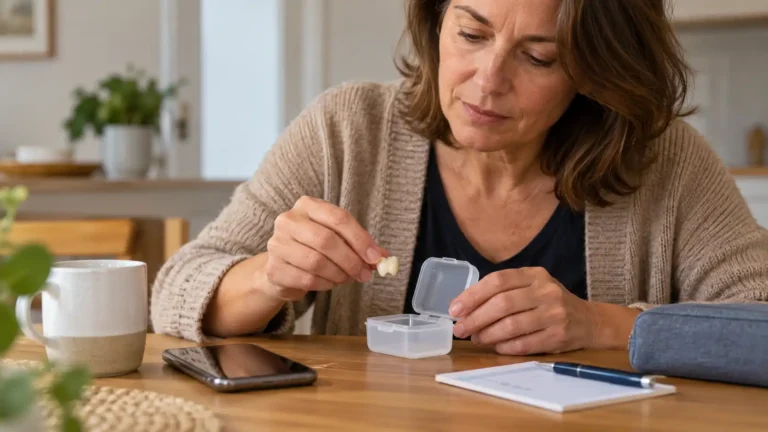
For a few days, note meals, snacks, and drinks taken between meals. Include what seems unimportant: sweet coffee, small sips of juice, candies kept in the mouth for a long time, or cookies eaten over the course of work. The reading is used to find a habit that can be modified, not to judge your diet.
You can then choose a realistic change, such as reserving a sugary drink at a set time rather than keeping it close to you for several hours. Water is a simple option for thirst between meals. A medical or dietary constraint should be discussed with the following professionals; dental health should not lead to the suppression of a necessary intake.
Distinguishing sugar from acidity
A drink without sugar can remain acidic. The risk of erosion, which corresponds to chemical wear of dental tissues, is different from the mechanism of decay. “Sugarfree” does not automatically mean “no effect on the teeth”.
Do not seek to compensate for repeated intakes by aggressive brushing or product accumulation. The basics remain fluoride toothpaste, complete cleaning and monitoring. If cavities come back, the survey of habits makes it possible to discuss concrete causes, including a dry mouth or areas with little access.
Noticing repeated sugar exposure during the day
A sugary drink consumed little by little maintains opportunities for acid attack. Note when you take it, without trying to establish a risk score yourself. Caries develop in a balance that also includes saliva and hygiene.
Start by noticing a snack or drink that recurs without hunger or a particular need. Discuss changes that suit you, such as more structured timings, water within reach or an alternative adapted to your needs.
Fluoride toothpaste and brushing complete the prevention. They do not make it possible to calculate a number of “risk-free” snacks. Ask for individual advice in case of repeated caries.
Frequently asked questions
Key takeaways
Observe the frequency of sugary intakes. Build realistic changes with regular hygiene and proper follow-up. Teeth are exposed to every sugary snack or drink, so watching the repetition of occasions helps to understand the risk. Also observe the drinks consumed in small sips and the snacks that last. The goal is to spot achievable changes, without suppressing necessary meals or feeling guilty. Hygiene and follow-up are essential. If your dietary needs are special, have the benchmarks adapted with a professional to preserve both your general health and your teeth.
Sources
NIDCR NIH — Tooth Decay (date non affichée).
NIDCR NIH — Oral Hygiene (date non affichée).
Last editorial review: October 2026
 Numa Costa
The pen name under which I write articles and develop my editorial websites. Curious by nature, I like to understand how things work, explore everyday questions and make information easier to understand and use.
→ More about the author