How to care for a dental implant every day
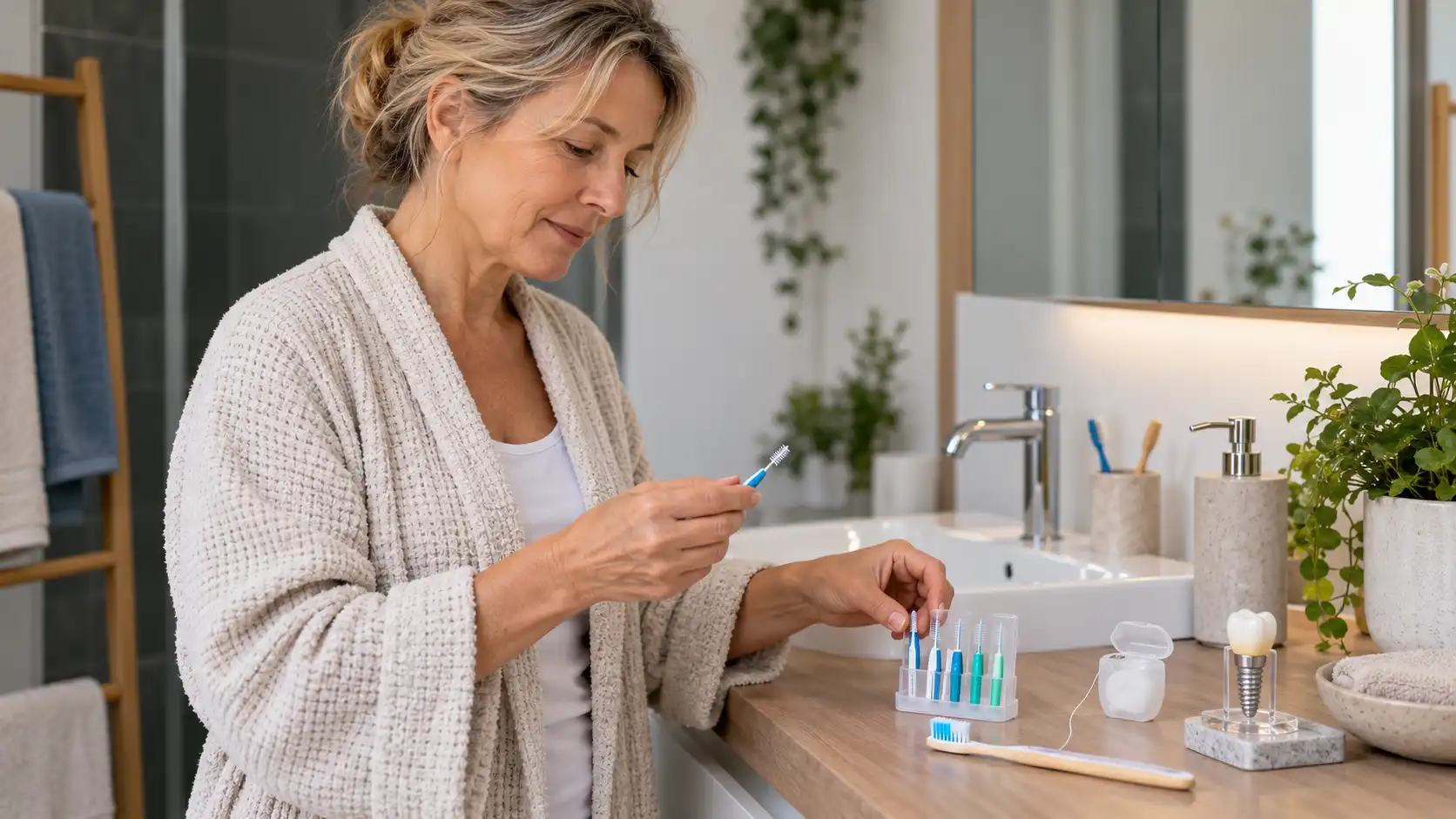
An implant requires daily hygiene and check-ups. The artificial device does not negate the care needs of the tissues around it.
Important
This article provides general information and does not replace an individual consultation, diagnosis or treatment from a dentist or another healthcare professional. If you have symptoms, seek advice appropriate to your situation. Do not change a treatment based solely on this content.
Do not scratch around an implant with an instrument purchased for home scaling. In case of pain, repeated bleeding or mobility, contact the practitioner.
Placement is often the focus of concern. Once the treatment is complete, the small habits take over: they are the ones that must be made understandable and achievable.
An artificial surface surrounded by living tissues
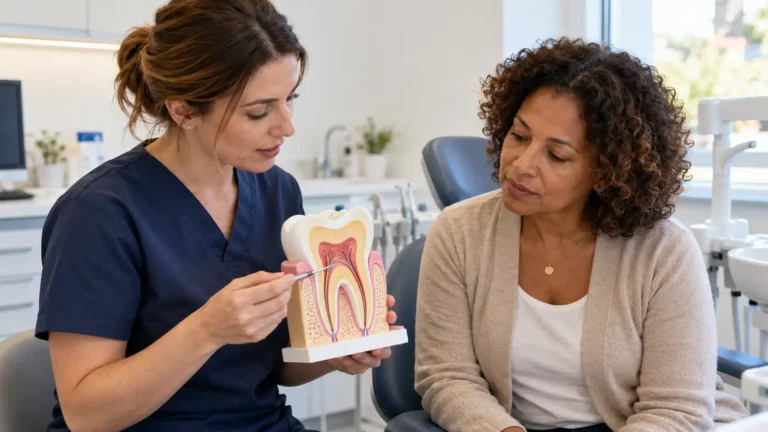
The implant does not develop a cavity like a natural tooth. On the other hand, plaque can accumulate on its components and cause inflammation of nearby tissues. Inflammation limited to the mucosa and damage with bone loss do not correspond to the same problem.
The cleaning therefore seeks to protect the gum and the environment of the implant, but also the remaining teeth. The installation of a fixed prosthesis does not make the spaces under it automatically accessible. The route of the accessories must be adapted to the actual form of the restoration.
A demonstration on your own restoration
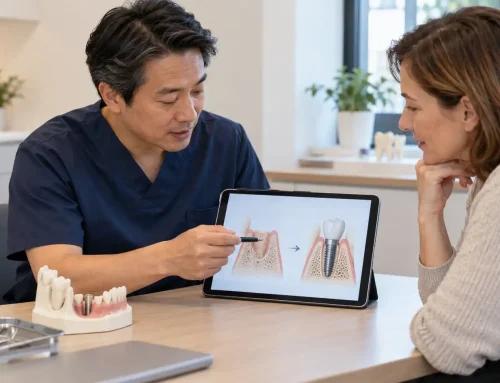
Ask how to brush the edge of the restoration, what accessory passes between the components and how to clean under a part of bridge. A brush, a floss threader or other device can be proposed depending on access. A tool that hurts or hangs is not to push harder.
Try the technique in front of the professional to check the grip. This step is especially useful if the prosthesis covers multiple implants or if hand mobility is limited. Avoid improvised metal instruments and unmarked abrasives. A possible mouthwash remains a targeted supplement.
Follow-up involves more than cleaning
The visits follow the condition of the tissues, the stability of the prosthesis and the chewing contacts. The professional can look for bleeding, examine the components and use images when they are needed. The absence of pain does not rule out a beginning problem.
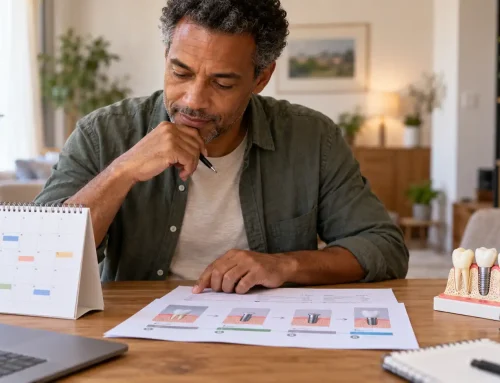
Keep implant references, reports, and restoration information. If you change dental practices, these documents help to organize the continuity of the follow-up. Report new bleeding, discharge, pain or mobility. The maintenance appointment is also an opportunity to readjust the daily equipment when the shape of the prosthesis or your ability to clean it changes.
Cleaning accessible areas around an implant
Ask how to reach the areas around your prosthesis and what accessory to use. Interdental cleaning explains the principles, but the size and passage must be adapted to the shape of your restoration.
The frequency depends on your situation. Keep documents about the implant and its components, and pass them on if you change dental practices. A follow-up is not only used to check the appearance of the crown.
A new discomfort, bleeding or moving part deserves a call. The article on post-implantation problems helps to distinguish the words to use to describe what you see.
Frequently asked questions
Key takeaways
The maintenance can be learned on your own prosthesis. Have the techniques shown and keep a way of contact in case of change. An implant doesn’t develop a cavity like a natural tooth, but the tissues around it can run into problems. The maintenance must therefore make it possible to clean the accessible areas around the restoration and between the teeth, with the accessories shown in the dental practice. If a cleaning tool will not pass between your teeth, ask for advice rather than forcing it. The monitoring program complements the daily routine. Bleeding, persistent discomfort or mobility should be reported; absence of pain does not dispense with the planned check-ups.
Sources
 Numa Costa
The pen name under which I write articles and develop my editorial websites. Curious by nature, I like to understand how things work, explore everyday questions and make information easier to understand and use.
→ More about the author