Gum grafting: what is the aim of the procedure?
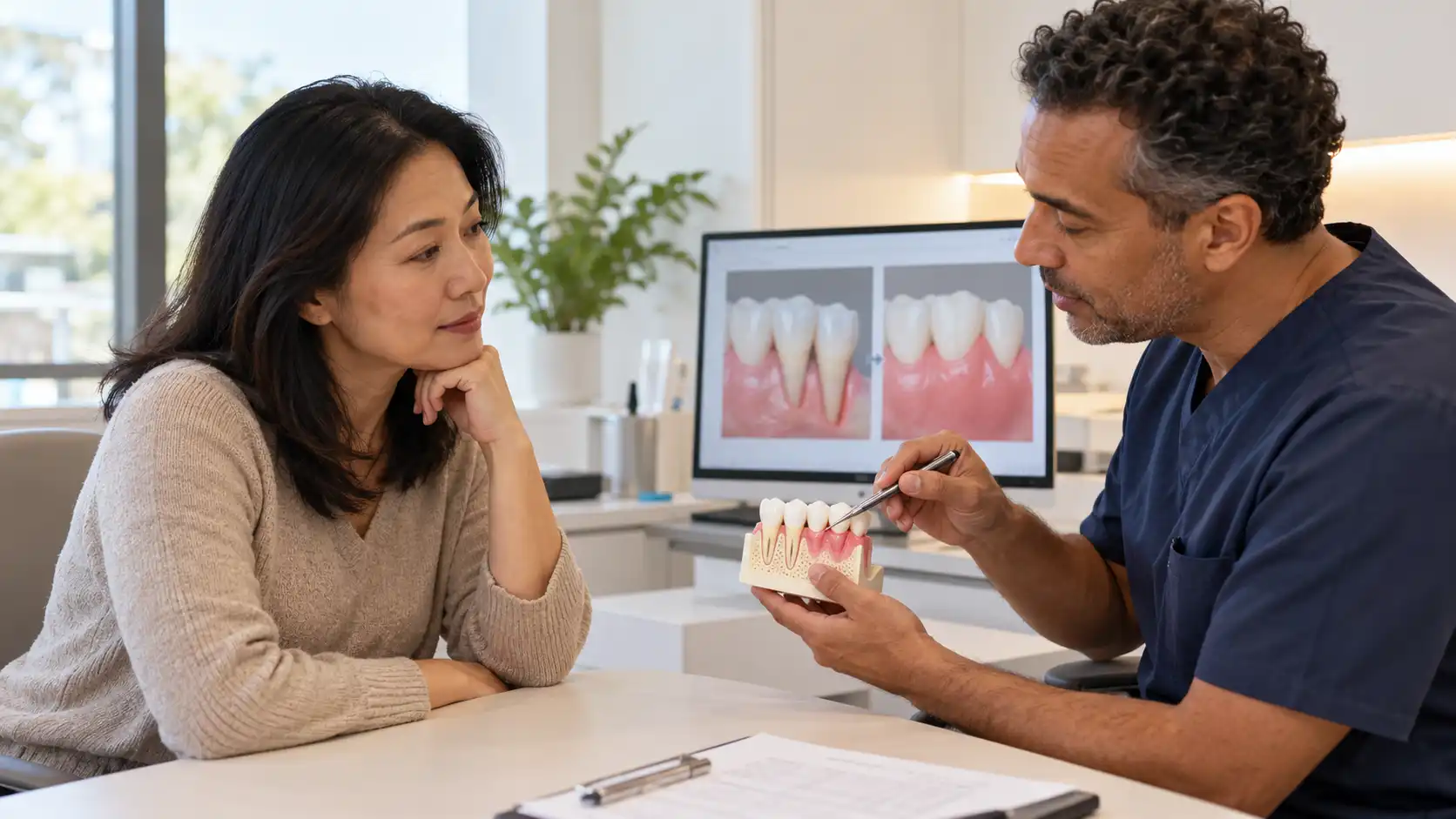
A gum graft aims to strengthen or cover certain tissues depending on the situation. It is not an automatic solution for all recessions.
Important
This article provides general information and does not replace an individual consultation, diagnosis or treatment from a dentist or another healthcare professional. If you have symptoms, seek advice appropriate to your situation. Do not change a treatment based solely on this content.
The expected result depends in particular on the area to be treated. Ask for realistic goals and personalized postoperative instructions.
Before an intervention, it is natural to want to know what the result will look like. But the first question is simpler: what are we trying to improve in your case?
Different possible aims of a gum graft
A gum graft may be intended to cover an exposed root, strengthen fine tissue, or improve certain maintenance conditions. The reduction of sensitivity and the appearance of the smile can also count. The treatment plan must specify what benefit is expected in your situation.
The result depends on tooth position, available tissue and support around the root. Complete root coverage is not always possible. A sound proposal distinguishes the hoped-for result from what can reasonably be achieved, and explains the limits before surgery.
Where the tissue comes from and how it is placed
Depending on the technique, tissue can be taken from your mouth, often at the palate, and then placed on the area to be treated. Other options may be used in some indications. The chosen technique influences the number of sites to be protected and postoperative instructions.
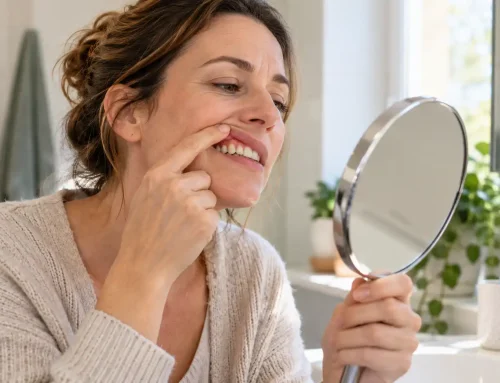
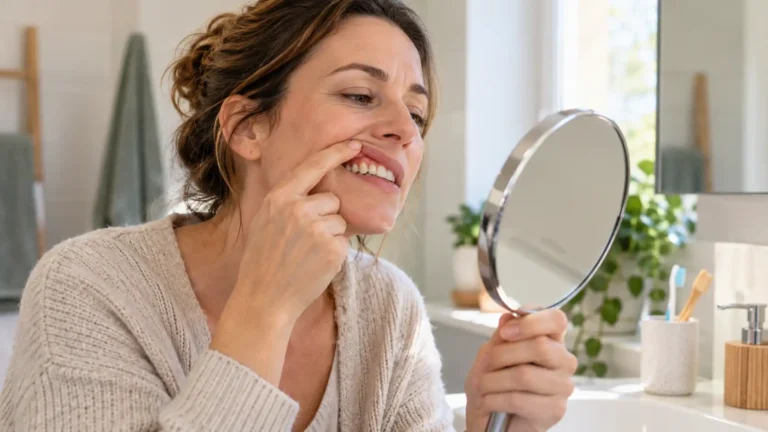
The tissue is positioned and stabilized, usually with sutures. The area must then heal without manipulations that could displace the graft. The professional specifies how to clean the other teeth, how to temporarily maintain the area operated and when to resume the usual brushing. It is not helpful to lift the lip repeatedly to check the result.
Preparing for the procedure and follow-up
Before the treatment, ask what discomforts are possible at the grafted site and, if there is one, at the donor site. Have the diet, the authorized medications, the work constraints and the check-up appointment specified. These instructions must take into account your treatments and the actual technique.
A graft does not replace the treatment of persistent inflammation or the correction of aggressive brushing. These factors must be taken into account to preserve the result. Report pain or swelling that increases, significant bleeding or impression of tissue displacement. The end result is appreciated with the practitioner after the evolution of the tissues, without daily comparison with photographs found online.
Clarifying the goal and recovery instructions
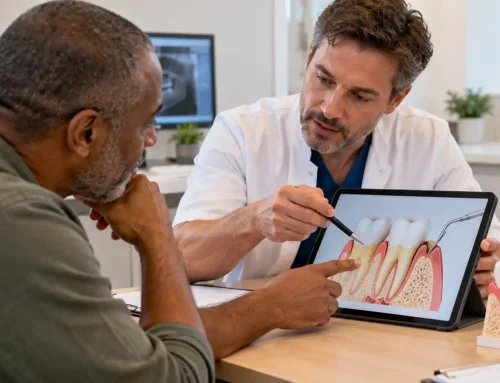
Assessment identifies the cause and extent of gum recession. A clear discussion distinguishes protection, comfort and root coverage as possible aims, without promising the same result for everyone.
Specify the origin of the tissue used, the steps and the constraints after the treatment. You don’t need to remember all the names of techniques to ask for an understandable explanation.
Write down your concerns: pain, meals, work, cost or final appearance. If periodontal disease is also present, ask how it fits into the overall plan.
Frequently asked questions
Key takeaways
Deciding on a graft begins with understanding your personal goal, its limitations, and the follow-up it requires. A gum graft can be proposed for a specific purpose, such as strengthening certain tissues or covering a root in a suitable situation. The indication, the possible donor site and the limits must be explained before the decision. Ask how healing is done, what actions are temporarily changed, and when to resume the usual cleaning. The result depends on the case: you should not automatically wait for full coverage. Check-ups are used to track healing and adjust the instructions.
Sources
 Numa Costa
The pen name under which I write articles and develop my editorial websites. Curious by nature, I like to understand how things work, explore everyday questions and make information easier to understand and use.
→ More about the author