Scaling and root planing: why clean below the gumline?
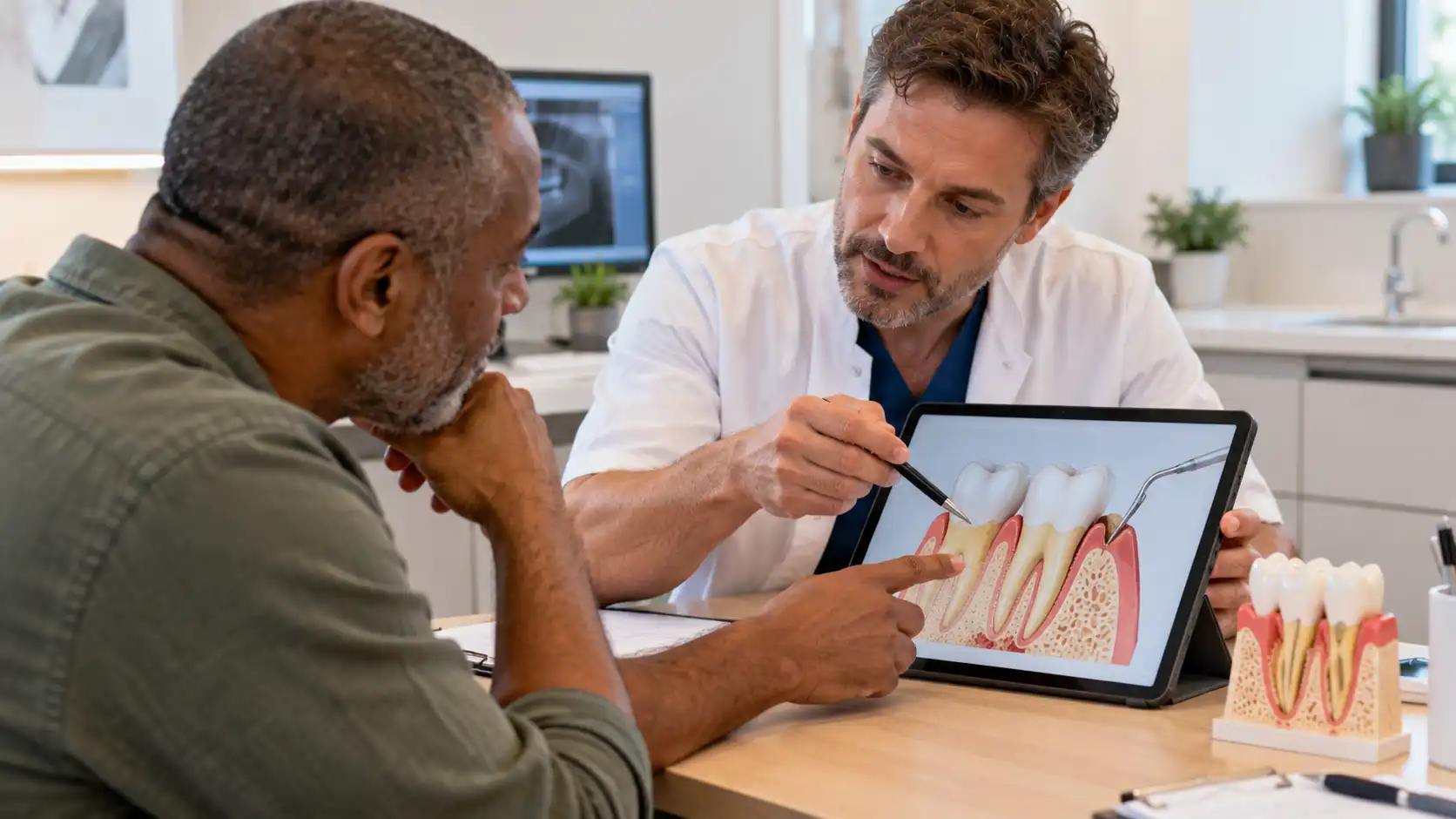
Root planing is a professional cleaning of tooth surfaces of the roots, especially as part of a periodontal treatment. It is not done with instruments at home.
Important
This article provides general information and does not replace an individual consultation, diagnosis or treatment from a dentist or another healthcare professional. If you have symptoms, seek advice appropriate to your situation. Do not change a treatment based solely on this content.
The choice of care, anesthesia and sessions is up to the dentist. Report unusual or persistent pain after treatment.
The term can impress because it evokes a gesture that is difficult to imagine. Understanding it does not require knowing all the instruments: it is enough to know which area is being treated and why.
What brushing alone cannot reach
In a periodontal pocket, the gum forms a space along the root where deposits can be maintained. The brush used at home does not remove all the tartar present in these areas. Root planing aims to clean the affected surfaces with suitable instruments.
The word can give the impression that the practitioner is trying to reshape the entire root. The main goal is to remove deposits and make the area compatible with inflammation control. Care is guided by measurement and examination, rather than done systematically on each tooth.
How treatment sessions are organised
The mouth can be treated by areas. Local anesthesia can be used to allow for comfortable and accurate cleaning. The choice of instruments and the number of sessions depend on the extent of deposits and access to surfaces.
The instructions after the treatment are about cleaning, comfort and the signs to report. Tissues may become less swollen, and some roots may appear more visible when inflammation decreases. A sensitivity can then require an adaptation of the maintenance or local treatment. Any significant or increasing discomfort should be reported.
Why reassessment is part of care
Removal of deposits does not immediately provide information on the durable response of tissues. During a subsequent check-up, the practitioner compares the bleeding, the pockets and the state of the maintenance. It can specify which areas have responded well and which require additional attention.
An antibiotic or mouthwash is not a substitute for cleaning under the gums. Conversely, root planing does not permanently compensate for a plaque that accumulates every day. Before you begin, show the material to be used between the teeth and ask when the reassessment will take place. These two elements make it possible to understand your role during the period following the sessions.
Preparing for cleaning below the gumline
When deposits are under the gums, a simple cleaning of the visible part does not answer the whole problem. The periodontal treatment plan specifies the areas to be treated and how to organize the sessions.
Ask how you can feel, how to resume hygiene gestures and who to call in case of difficulty. The answers should be adapted to the care performed, rather than drawn from a calendar found online.
The assessment is used to appreciate the evolution of gums and pockets. Regular scaling and monitoring are not interchangeable: their frequency and content meet your assessment.
Frequently asked questions
Key takeaways
The root planing treats an area that the brushing does not reach alone. The assessment and the revaluation give it its meaning. Root planing involves surfaces under the gums and is part of the treatment of a diagnosed periodontal disease. It is not confused with a simple visible scaling. The areas treated, the organization of the sessions and any instructions vary according to the assessment. Ask how to clean after the treatment and when the results will be re-evaluated. Home gestures and maintenance complete the procedure; an improvement in discomfort is not enough to conclude that follow-up has become unnecessary.
Sources
 Numa Costa
The pen name under which I write articles and develop my editorial websites. Curious by nature, I like to understand how things work, explore everyday questions and make information easier to understand and use.
→ More about the author