Dental abscess: why antibiotics are not always enough
An abscess is an infection that requires dental evaluation. An antibiotic may be indicated in certain situations, but it does not replace the treatment of the cause, for example drainage or care of the tooth concerned.
Important
This article provides general information and does not replace an individual consultation, diagnosis or treatment from a dentist or another healthcare professional. If you have symptoms, seek advice appropriate to your situation. Do not change a treatment based solely on this content.
Fever and swollen face require urgent advice. Difficulty breathing or swallowing: call 15 or 112 in France.
When the pain goes down after treatment, one may be tempted to believe that everything is settled. The important step is to know what has been done for the source of the infection.
An infection with a local source
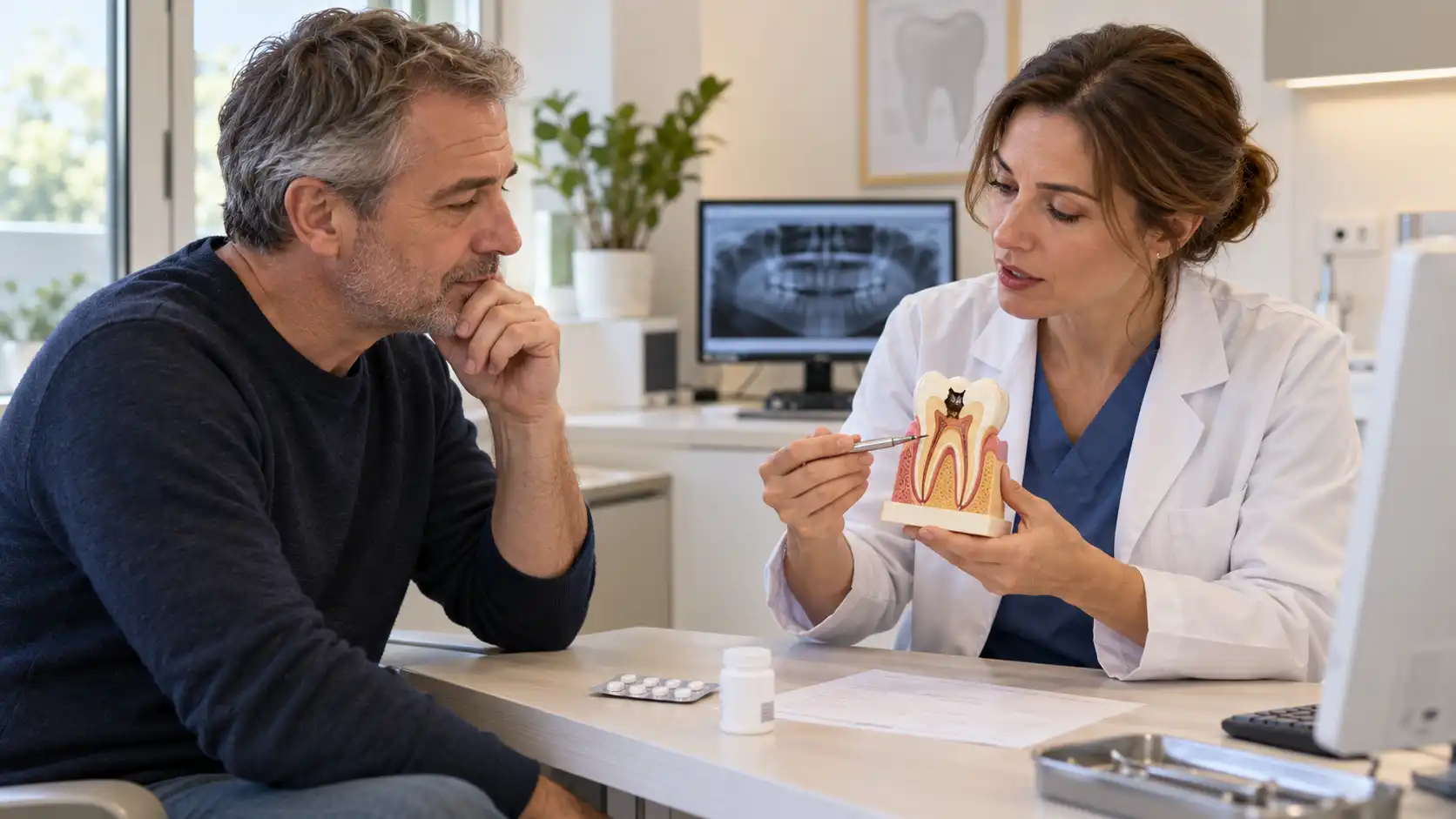
An abscess is an accumulation of pus associated with an infection. It can come from the inside of a tooth, when the pulp is reached, or from the tissues around it. These different origins explain why not all abscesses receive the same care.
An antibiotic acts on bacteria that are sensitive to the drug, but it does not remove an infected pulp, clean a periodontal pocket, or repair the tooth. If the source remains present, symptoms may recur after improvement. The examination and any necessary images are used to locate this source.
What dental treatment addresses
Depending on the cause, the dentist may drain the pus, clean the root canals, treat a pocket around the tooth or extract a tooth that cannot be saved. Further restoration and appointments may then be necessary. The first treatment that provides relief is therefore not always the end of care.
The prescription of an antibiotic depends in particular on the extent of the infection and the medical situation. It is not automatic for any localized infection that can be treated with a dental procedure. If a medication is prescribed, follow the instructions and report a tolerance problem; do not change the duration alone.
Why less pain can be misleading
A discharge through the gum can reduce pressure and therefore pain. It does not mean that the cause is eliminated. A small point that lets out the pus deserves an examination even if you feel better.
Before leaving, specify the care performed, the next step and the signs that should lead to recall. Fever, swelling of the face, rapid aggravation or difficulty opening the mouth should be reported. Difficulty breathing or swallowing requires urgent medical help. Do not try to empty the abscess yourself: this manipulation does not replace the treatment and can aggravate the lesions.
Treating the cause of infection
The dentist decides how to treat the infection and preserve the tooth where possible. Depending on the findings, root canal treatment or another procedure may be needed. You should not have to choose for yourself between medication and a dental procedure.
Do not pick up a remaining antibiotic and do not pierce the area. For pain, check the contraindications; do not take anti-inflammatory drugs in self-medication if abscess is suspected.
Ask what treatment remains and when to call again if symptoms worsen. Emergency warning signs still matter when you already have a prescription.
Frequently asked questions
Key takeaways
Treatment addresses the dental source of infection. A prescription does not replace the necessary dental care or monitoring for signs of worsening. An abscess requires identification and treatment of the source of infection. Depending on the assessment, care may involve drainage, root canal treatment or another procedure; antibiotics are neither automatic nor sufficient on their own. Reduced pain or a discharge does not prove healing. Clarify the remaining treatment and which signs should prompt another call. Do not reuse an old prescription, and report worsening symptoms or difficulty breathing or swallowing immediately.
Sources
 Numa Costa
The pen name under which I write articles and develop my editorial websites. Curious by nature, I like to understand how things work, explore everyday questions and make information easier to understand and use.
→ More about the author