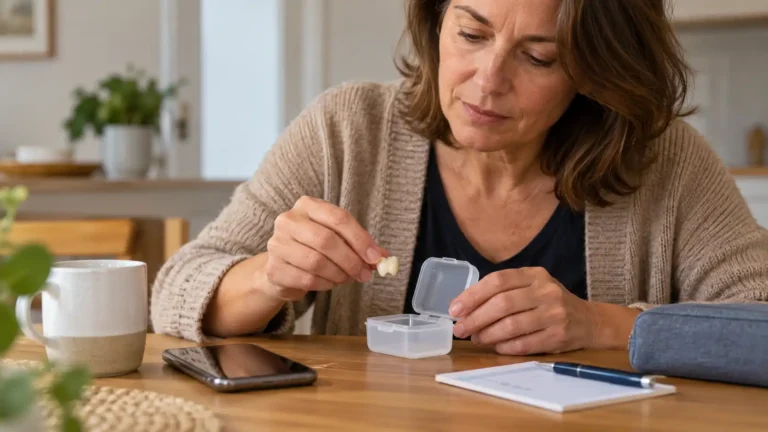
Floss or interdental brushes: how to clean between your teeth
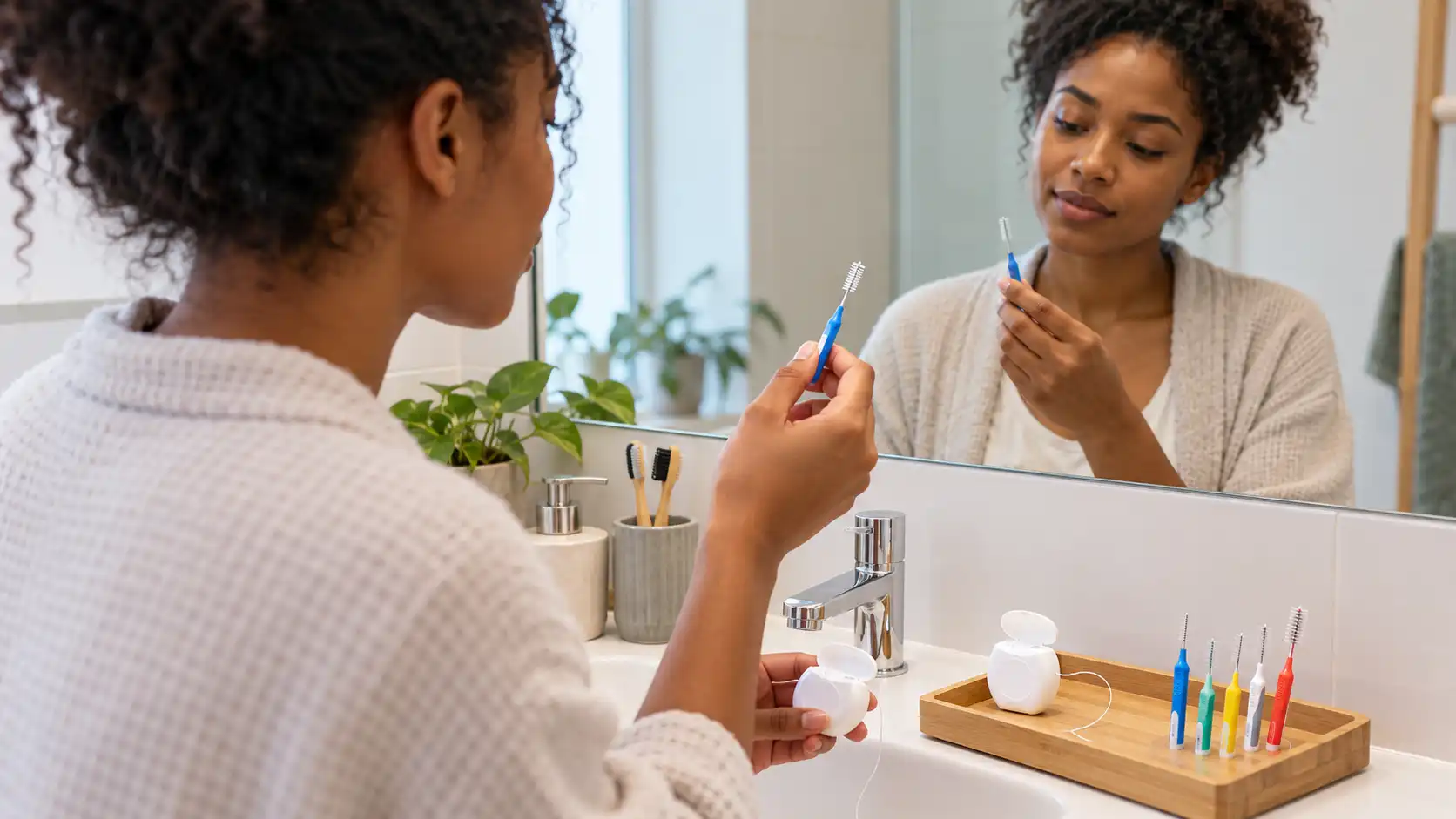
The floss and brushes are used to clean between the teeth, where the brush is difficult to access. Their choice depends on the width of the spaces, the possible prostheses and your ease of use.
Important
This article provides general information and does not replace an individual consultation, diagnosis or treatment from a dentist or another healthcare professional. If you have symptoms, seek advice appropriate to your situation. Do not change a treatment based solely on this content.
Do not force an accessory that gets stuck or hurts. Persistent bleeding requires control.
One tool may be suitable for one area and less suitable for another. Several accessories can be useful in the same mouth.
Using floss without hurting your gums
Floss is mainly useful where the contact between teeth is too tight for an interdental brush. Ease it through the contact using small movements, without letting it snap onto the gum. Once through, curve it into a C shape against the side of one tooth and move it gently along that surface. Then clean the side of the neighbouring tooth.
Only raising and lowering the floss in the middle of the space may leave the tooth surfaces insufficiently cleaned. If holding two ends is difficult, a floss holder can make handling easier. The material must also allow to reach the back teeth, without having to force the opening of the mouth.
Choosing an interdental brush that fits
A brush should enter without constraint and put its bristles in contact with the surfaces. A size too small can pass without cleaning enough; a size too large can hurt or get stuck. Several sizes may be needed in the same mouth, especially after gum treatment.
Follow the route shown by the professional and do not try to create a passage by pushing. Replace a damaged accessory according to its instructions. If a space seems inaccessible, have the solution checked: the absence of passage does not mean that this area should be left without maintenance.
Adapting cleaning around dental restorations
Ordinary floss cannot always be inserted from above under the replacement tooth of a bridge. A floss threader or another suitable tool can reach this area. Orthodontic brackets, fixed retainers and implant restorations also require specific cleaning routes.
At first, choose a calm moment and a constant order. Daily cleaning becomes easier when combined with evening brushing. Repeated bleeding, localized pain or floss that always tears in the same place justify a check-up: it is necessary to distinguish an inflammation, an inappropriate technique and a dental obstacle.
Finding the right route between your teeth
The floss slips into tight contacts, then gently hugs the side of the tooth. A brush goes through an accessible space without being pushed brutally. Ask the dentist to show you the route and, if necessary, the appropriate sizes.
Interdental cleaning completes the daily brushing. A floss holder or other recommended device can help when holding the floss is difficult. The goal is a habit that you can really maintain.
Bleeding does not automatically mean that the tool is bad. Inflammation of the gums may occur. Have the material, the technique and the condition of the gum checked.
Frequently asked questions
Key takeaways
Choose the device according to your spaces and your dexterity. Clean gently and have persistent difficulty assessed. Floss and interdental brushes suit different spaces. A very tight contact may not admit a brush, while a wider space may need a different tool. Choose the size and technique for each area with guidance at the dental practice. Gentle cleaning is better than forcing a tool through. If it catches, hurts or leaves persistent bleeding, have both the technique and your gum health reviewed.
Sources
NIDCR NIH — Oral Hygiene (date non affichée).
NIDCR NIH — Periodontal Gum Disease (date non relevée).
Last editorial review: October 2026
 Numa Costa
The pen name under which I write articles and develop my editorial websites. Curious by nature, I like to understand how things work, explore everyday questions and make information easier to understand and use.
→ More about the author