Manual or electric toothbrush: how to choose
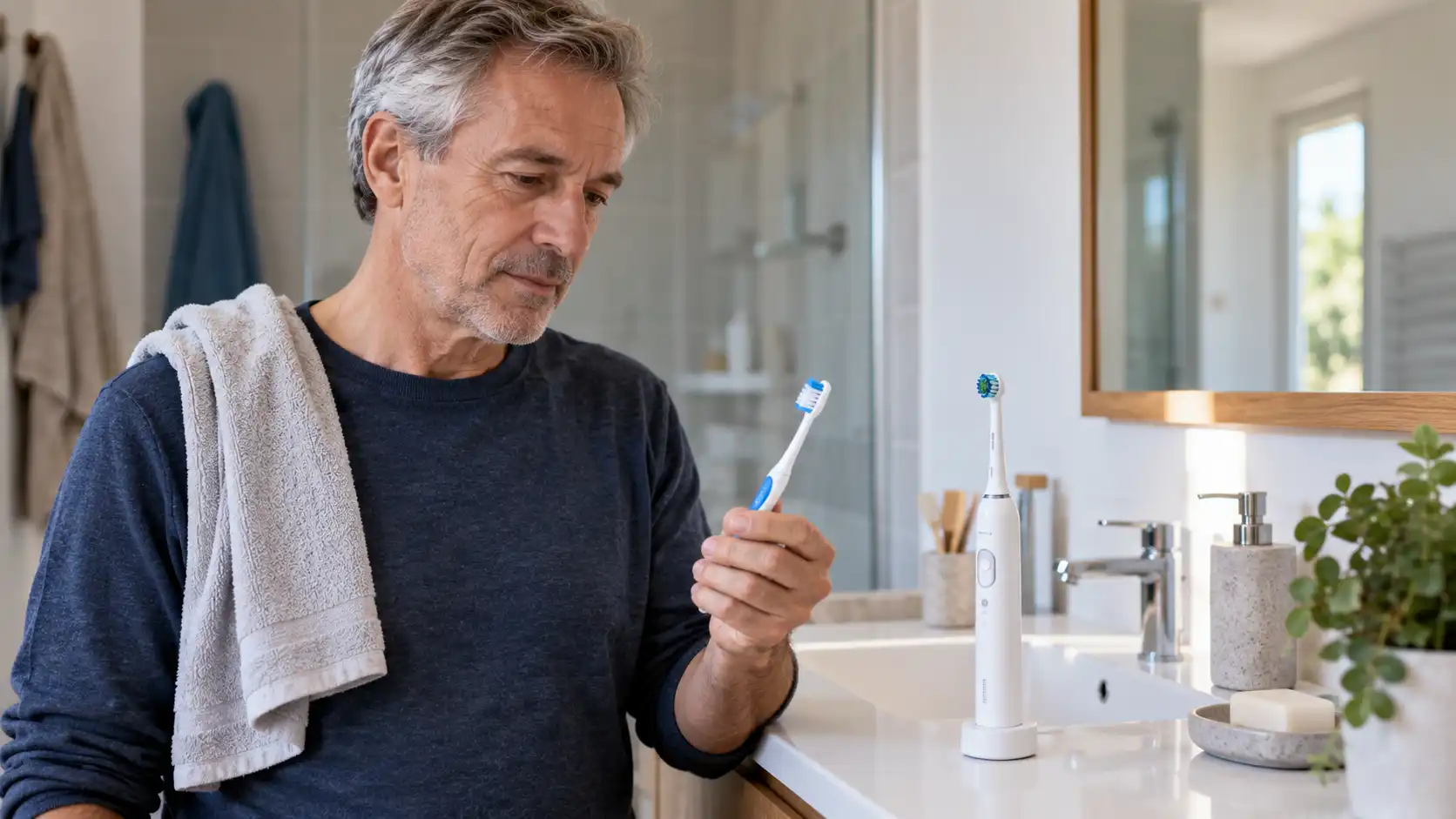
The right choice is a brush that you can use regularly, with gentle, accurate movements. An electric brush can make the routine easier; a manual brush is an option if you clean all sides properly.
Important
This article provides general information and does not replace an individual consultation, diagnosis or treatment from a dentist or another healthcare professional. If you have symptoms, seek advice appropriate to your situation. Do not change a treatment based solely on this content.
If your mobility is limited, your gums are painful or you are wearing a device, ask for personalized advice.
Models differ in their head, grip and functions. The choice must start from your brushing difficulties and your comfort of use.
How manual and electric brushes work differently
With a manual toothbrush, you produce the cleaning movement yourself. An electric toothbrush moves its head, but you still need to guide it over each surface. It cannot automatically identify a missed molar, an interdental space or unsuitable pressure.
With some electric models, we slowly accompany the head from one tooth to another without adding energetic friction. The instructions vary depending on the mechanism: they deserve to be read and shown. Switching to electric while maintaining large rapid movements can make the technique less accurate.
Four practical criteria for choosing
The first criterion is access: a head that reaches the back teeth without bothering is better than a head that is too bulky. The second is the grip: weight, handle thickness and ease of holding the brush count if the hands are painful or less mobile. The third is maintenance: head availability, reloading and cleaning of the handle. The fourth is the cost over time, with replacements, and not just the purchase price.
A timer can help a person who systematically shortens their brushing. A pressure sensor can draw attention to a gesture that is too pressed. These functions respond to specific difficulties; they do not replace the verification of the route. Conversely, a multiplication of programs that are not easy to understand can complicate a simple routine.
Reviewing your choice after a few uses
Ask yourself if you actually access the inner sides, if you finish the four sectors and if the material is comfortable. An unusual sensation of vibration may require adaptation; repeated pain should not be considered necessary for effectiveness.
For a person helped on a daily basis, have the equipment tested by the caregiver as well. The best solution should remain usable on ordinary days, with time and mobility available. At the next appointment, bring your brush or a photo of its head: the professional will be able to give advice on your real material rather than on an abstract model.
Choosing a brush you will use regularly
Look at the flexibility of the bristless, the size of the head, the handle and the cost of replacements. For an electric one, also check the simplicity of the assessments and the loading. Options do not replace the brushing technique.
A comfortable handle can matter more than an extra mode. Ask for a demonstration, because the movement depends on the equipment. Do not automatically use a manual brushing technique with every electric model.
Whatever the brush, it does not dispense with interdental cleaning. Keep your attention on the entire mouth rather than the advertised performance on the package.
Frequently asked questions
Key takeaways
Choose according to access, grip and your ability to maintain the routine. Ask someone to show you the technique for your model. The best choice is the one you can use correctly and regularly. Compare head size, weight, grip, and access to the back teeth; additional functions are only of interest if they actually help you. An electric brush also requires an adapted technique. In case of difficulty in mobility or cleaning around a device, ask for a demonstration and check that the cost of replacement heads remains compatible with your routine.
Sources
NIDCR NIH — Oral Hygiene (date non affichée).
Assurance Maladie — Comment bien se brosser les dents (2026).
Last editorial review: October 2026
 Numa Costa
The pen name under which I write articles and develop my editorial websites. Curious by nature, I like to understand how things work, explore everyday questions and make information easier to understand and use.
→ More about the author