Helping children brush their teeth without putting pressure on them
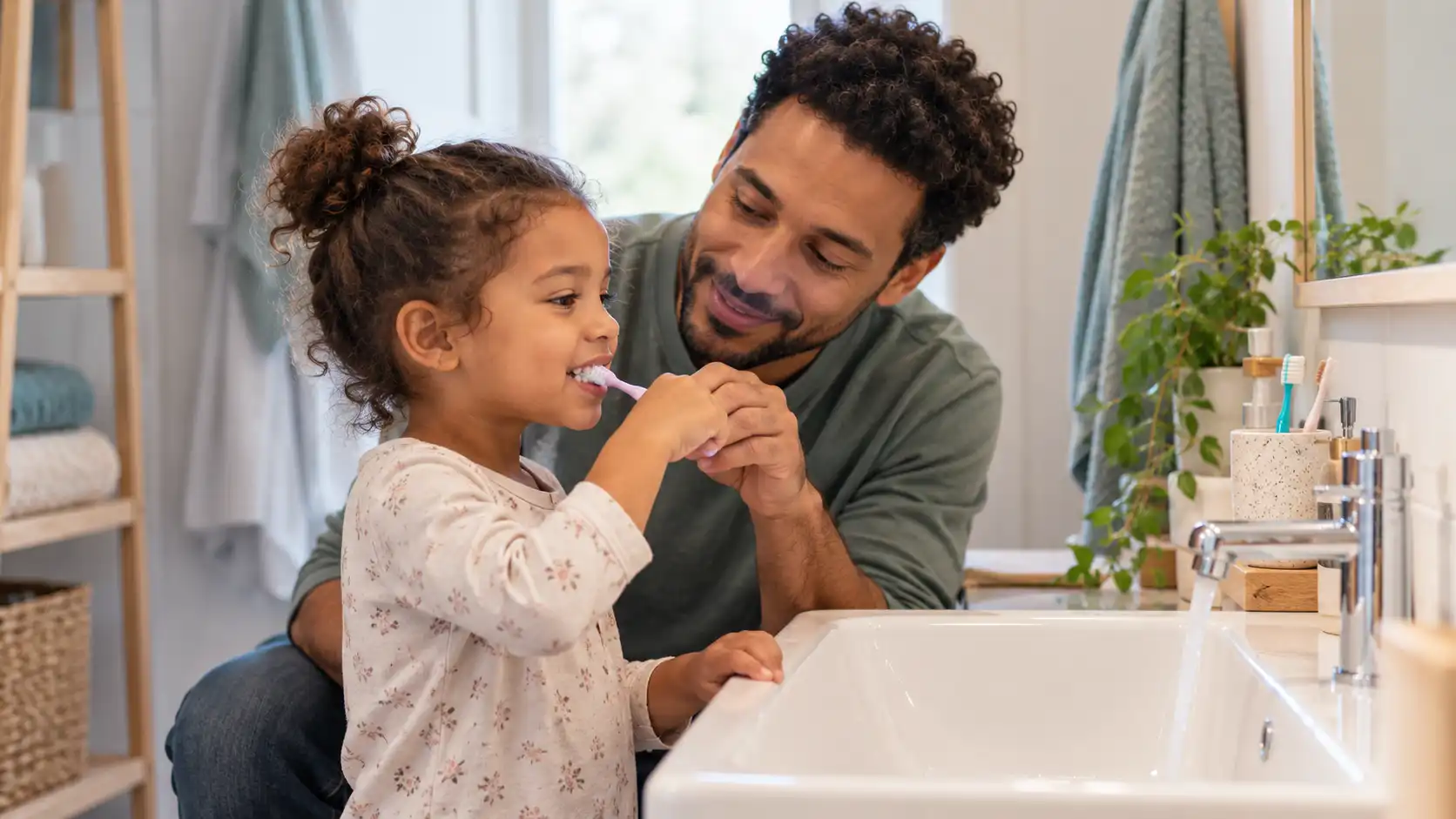
Cleaning begins with the first teeth. The parent carries out or accompanies the brushing according to the age and abilities of the child, with adapted equipment and toothpaste.
Important
This article provides general information and does not replace an individual consultation, diagnosis or treatment from a dentist or another healthcare professional. If you have symptoms, seek advice appropriate to your situation. Do not change a treatment based solely on this content.
For the dosage and the amount of fluoride toothpaste, ask for advice adapted to the age and the risk of tooth decay. Do not allow the child to swallow the product voluntarily.
Some nights, two minutes may seem very long. A predictable routine and simple explanations help more than a talk about “bad teeth” or a threat of consultation.
Starting with the first teeth
Cleaning begins with the appearance of the first teeth, with a material adapted to the small mouth. Do not wait until all the baby teeth are present. At ttheir age, the parent performs the technique; the fact that the child is interested in the brush does not mean that he can clean all the surfaces alone.
French brushing guidance recommends parents perform or assist with brushing until about age six, with supervision still needed in the first years of independence. These are reference points: the child’s actual ability, mobility and needs should guide the level of help.
Helping your child participate while still providing support
The child can choose between two moments compatible with the routine, hold the brush or start a few movements. The parent then completes the difficult areas, including the back teeth and inner surfaces. Simply explain this distribution: participating and knowing how to do everything are two different steps.
Install a stable position, good visibility and a suitable soft brush head. A short song or a constant order can help to get around, without turning brushing into endless negotiation. If the technique regularly causes unusual pain or rejection, seek discomfort rather than attributing it only to behavior.
Toothpaste, quantity and supervision
The choice of fluoride toothpaste and the amount depend on the age and the risk of tooth decay. Make these two details clear together, with your actual tube. The child must learn to spit out when he is able; access to the tube and products must remain controlled.
A routine is easier to install when it fits into the ordinary moments of the day. Parents can show the technique and avoid threats associating the dentist with punishment. During the check-up, ask for a demonstration for you and the child. It will allow to check the forgotten surfaces, the comfort and the level of help still useful.
Supporting your child’s brushing technique
The child can participate without already being able to clean all surfaces properly. Show the technique and have the dentist explain how to help him in a comfortable position.
Toothpaste fluoride plays a role in prevention. For a child, do not deduct the amount of that of an adult. Bring the tube to the appointment if you are in doubt about its use.
Present the office as a place to look and explain. In France, the M’T dents program every year facilitates follow-up in the ages concerned; it does not replace a consultation when a symptom appears.
Decay in baby teeth also needs assessment: their temporary nature does not make them unimportant.
Frequently asked questions
Key takeaways
Accompanying is more than delegating too early. Have the technique and use of toothpaste specified according to age. The child learns gradually, but the involvement of the parent remains necessary to ensure effective cleaning. A short, predictable and accompanied routine helps make the technique easier. Show the brushing route and specify the toothpaste and the amount adapted to age and risk. Holding the brush does not yet mean that all the teeth are cleaned. Ask for help if repeated pain or difficulties prevent the routine, without blaming the child.
Sources
Assurance Maladie — Prévenir les caries dentaires (2025).
Assurance Maladie — Comment bien se brosser les dents (2026).
Last editorial review: October 2026
 Numa Costa
The pen name under which I write articles and develop my editorial websites. Curious by nature, I like to understand how things work, explore everyday questions and make information easier to understand and use.
→ More about the author