How to brush your teeth without damaging your gums
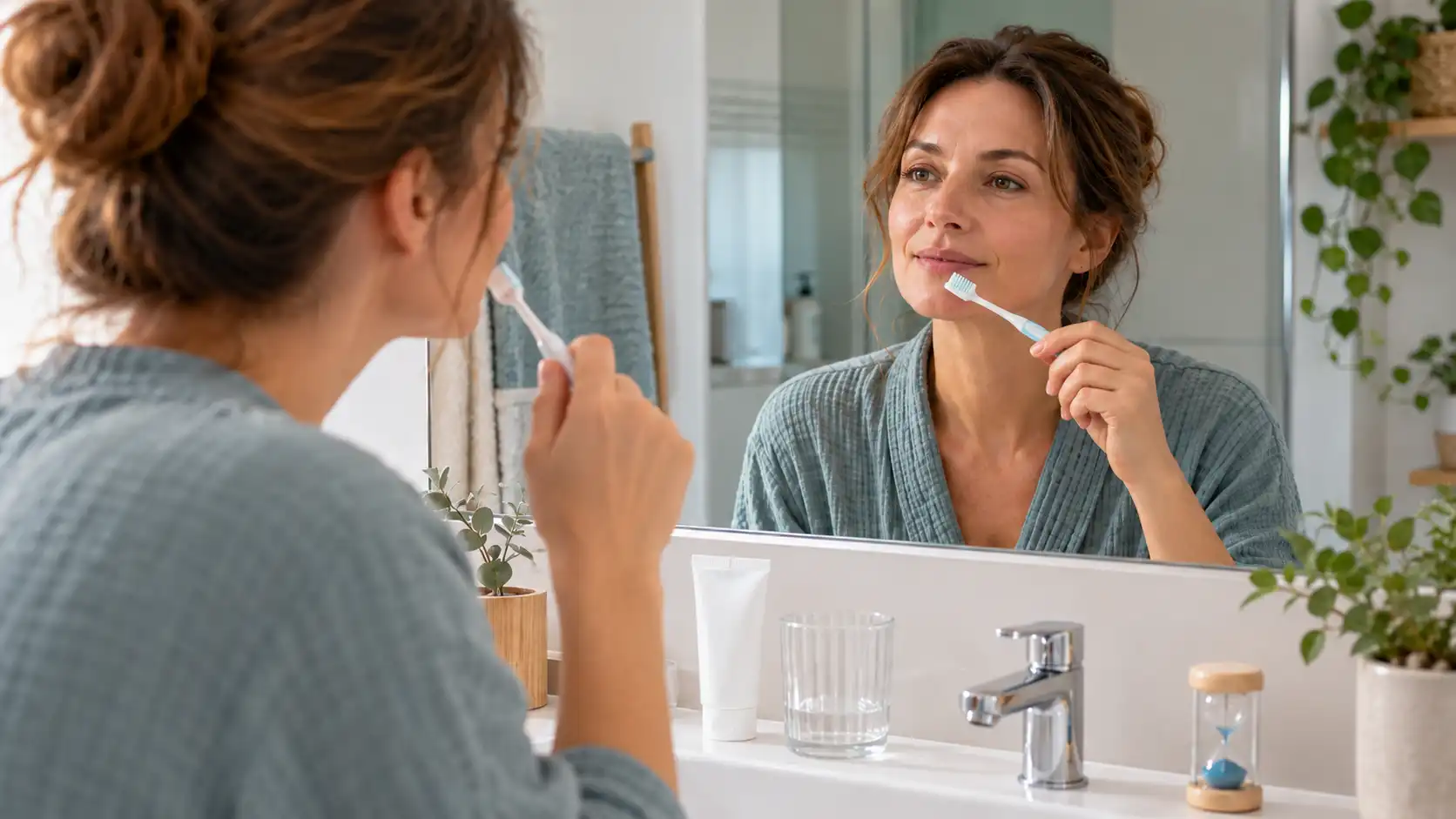
Brushing effectively means cleaning every tooth surface with a soft toothbrush and fluoride toothpaste, without pressing hard. For adults, brushing twice a day for about two minutes each time is a useful starting point.
Important
This article provides general information and does not replace an individual consultation, diagnosis or treatment from a dentist or another healthcare professional. If you have symptoms, seek advice appropriate to your situation. Do not change a treatment based solely on this content.
Repeated pain or bleeding calls for dental advice. Scrubbing harder does not address the cause.
You can follow the timer and still miss the same places each time. To improve your technique, pay attention to where the brush goes rather than trying to move it faster.
Why the brushing route matters
Dental plaque is a film of bacteria that sticks to teeth. Simply swishing water around your mouth does not remove it. Contact with the bristles disrupts this film, particularly along the gumline and behind the last molars. Your mouth may feel fresh after using toothpaste even when some areas have not been cleaned thoroughly.
Think of your mouth as four sections: upper right, upper left, lower right and lower left. In each section, clean the outer surfaces, inner surfaces and then the chewing surfaces. Following this order helps you avoid spending most of your time on the visible front teeth while missing those at the back.
Brushing step by step
With a soft manual toothbrush, place the bristles near the gumline, angled slightly towards the gums. Work on small areas with gentle movements rather than broad, forceful horizontal strokes. Holding the brush head more vertically can help you reach behind the front teeth. Small movements on the chewing surfaces help clean their grooves and contours.
Keep the handle easy to control. You do not need to bend the bristles hard to clean effectively. If an area is difficult to reach, change the angle and open your mouth just enough for comfortable access; a smaller brush head may help. If cleaning hurts, find out why rather than pressing harder.
What completes the two-minute routine
French guidance for adults recommends brushing at least twice a day for about two minutes each time with fluoride toothpaste. The evening session is an essential part of the routine. Replace the brush after about three months, or sooner if the bristles become misshapen.
A toothbrush cannot fully clean where teeth meet. Add an appropriate interdental cleaning tool, and ask how to clean around any appliance or restoration. At your check-up, ask which areas still retain plaque. This gives you more useful feedback than simply being told your brushing is “good” or “bad”.
Checking the areas you tend to miss
Clean the outer, inner and chewing surfaces, following the same order and moving gently along the gumline. Cleaning between your teeth reaches areas that toothbrush bristles cannot clean well.
Small, controlled movements help you clean without scrubbing aggressively. If the bristles splay quickly, ask your dentist to watch your technique rather than simply switching brands.
Build brushing around two regular moments in your day. Your choice of fluoride toothpaste also matters. A simple routine you maintain is more useful than a collection of tools you do not know how to use.
When choosing your equipment, comparing manual and electric toothbrushes helps you focus on ease of use rather than the number of features.
Frequently asked questions
Key takeaways
Clean every surface, use gentle movements and clean between your teeth. Consistency and technique work together. Effective brushing follows a route across the outer, inner and chewing surfaces. Pressure cannot replace this route: a soft brush and controlled movements clean without aggressive scrubbing. Notice which areas you miss, ask for a demonstration and adapt your interdental cleaning. Repeated pain or bleeding needs an explanation, rather than harder brushing.
Sources
NIDCR NIH — Oral Hygiene (date non affichée).
Assurance Maladie — Comment bien se brosser les dents (2026).
Last editorial review: October 2026
 Numa Costa
The pen name under which I write articles and develop my editorial websites. Curious by nature, I like to understand how things work, explore everyday questions and make information easier to understand and use.
→ More about the author