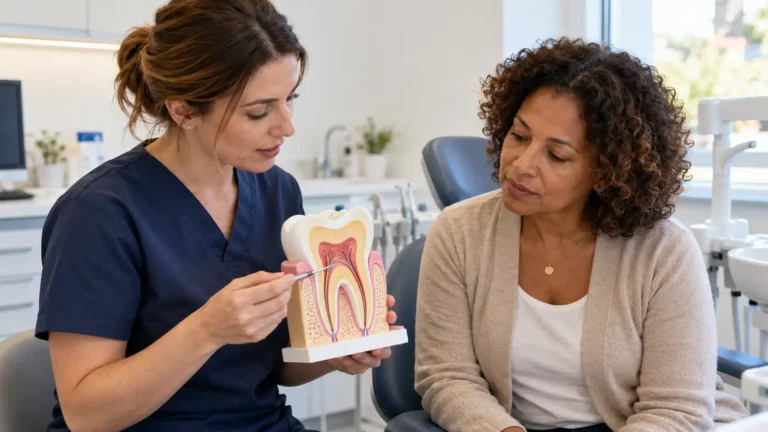
Fear of the dentist: preparing for a first appointment

You can report your fear as soon as you make an appointment. Explaining what worries you allows you to discuss the means of accompaniment before the treatment.
Important
This article provides general information and does not replace an individual consultation, diagnosis or treatment from a dentist or another healthcare professional. If you have symptoms, seek advice appropriate to your situation. Do not change a treatment based solely on this content.
A significant fear may require specific care. Do not self-medicate with sedatives or mix alcohol and medicines to get through the appointment.
After several years without dental visits, fear of judgement can add to fear of treatment. You can start with a simple sentence: “I need you to explain what will happen, and I need to be able to take a break.”
Identifying what makes the appointment difficult
Fear can include pain, needles, noises, feeling out of control, or a previous experience. It can also be linked to shame after several years without consultation. You don’t have to tell everything, but naming what bothers helps the team prepare for the welcome.
When making an appointment, tell if you want to understand the exam and the possibilities first. In the absence of an emergency, ask what can be arranged for this first visit. Do not assume that all dental practices offer the same modalities; a prior explanation avoids ill-defined expectations.
Agreeing how to communicate during the examination
Agree to a pause signal, such as raising your hand, and ask for gestures to be announced. You may wish to see an instrument before it is used or receive explanations in several steps. Also indicate what does not help you, such as too many operational details.
Prepare three questions in a notebook: what will be examined, what is urgent, and what can be programmed next. Ask for a reformulation when you don’t understand. Being afraid and being able to participate in the decision are compatible; the consultation can be organized to leave you this place.
Building a manageable treatment plan
After the assessment, a prioritized plan distinguishes relief, priority care and follow-up. More progressive sessions can be discussed as needed. Sedation is a possibility in some situations, but it must be evaluated and explained; it is not automatic.
Avoid taking a sedative medication or alcohol to facilitate the visit alone. Report any treatments you are already taking. If fear permanently prevents access to care, specific support can be sought. In case of suspected pain or infection, explain both your symptoms and your anxiety: the team must know both to offer a appropriate advice.
Agreeing a reassuring approach with the practice
Pain, noise, lying down or an old experience may worry differently. You don’t have to tell everything; concrete information can already help the team.
Ask how to indicate that you want a break and have the appointment specified. Don’t promise yourself that you will endure everything without saying anything.
If you have pain that requires urgent advice, tell the office at the same time as your fear. For a scheduled treatment, such as extraction, approach the possibilities of accompaniment early enough.
Frequently asked questions
Key takeaways
You can explain your fear so the dental team can take it into account. A better-explained appointment often starts with a simple and accurate request. You can announce your fear before the consultation and ask for a first step dedicated to explanations. A pause signal, described progress and written questions make the appointment more predictable. Specify what really worries you: pain, noise, gesture or past experience. A significant fear may require additional support that the practice will help you consider. Do not self-medicate with a sedative to get through the appointment; the preparation must remain adapted to the care and your health.
Sources
NHS — What happens when you visit an NHS dentist (2025).
NHS — Taking care of your teeth and gums
Last editorial review: October 2026
 Numa Costa
The pen name under which I write articles and develop my editorial websites. Curious by nature, I like to understand how things work, explore everyday questions and make information easier to understand and use.
→ More about the author